My husband stood across our kitchen and told me to apologize to his mother or leave. She leaned back on the barstool and smiled. “She has nowhere else to go.” I said, “All right.” Upstairs, an old brass key was waiting—and Daniel had never asked what it opened.
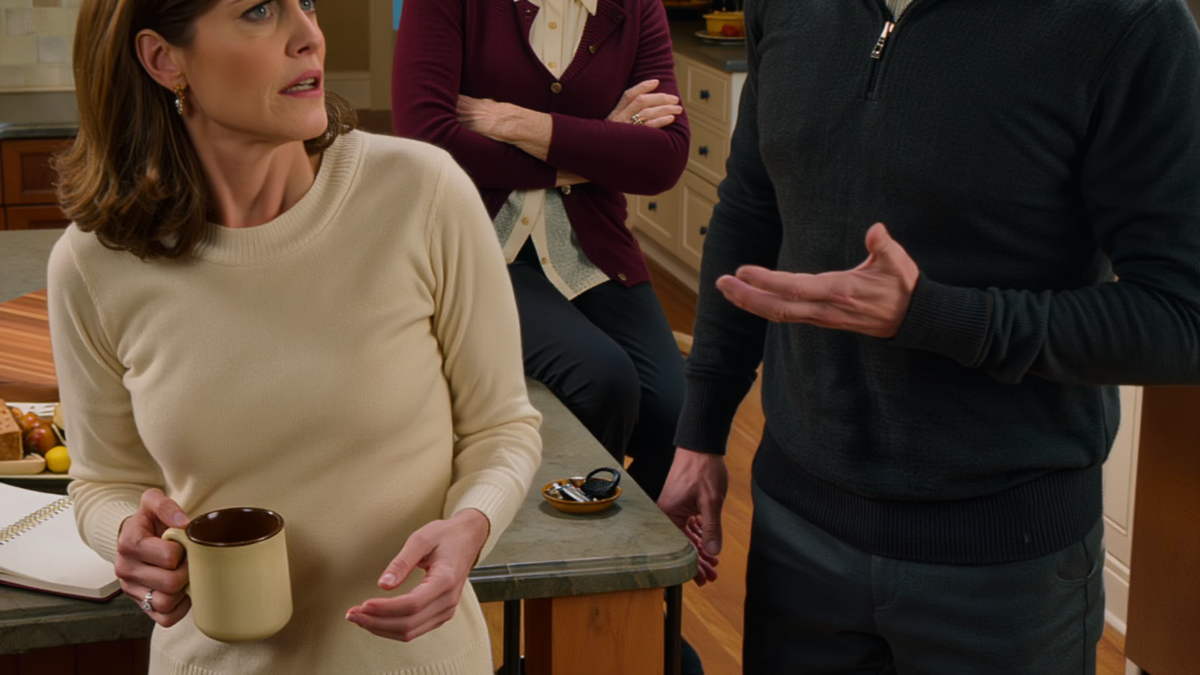
My husband told me to apologize to his mother or leave our house.
His mother smiled and said, “She has nowhere else to go.”
I looked at both of them and quietly said, “All right.”
That was the moment everything changed.
My name is Barbara. I was forty-nine that November, and Daniel and I had been married for twenty-two years. We lived in a comfortable colonial house in Greenwich, Connecticut, on one of those quiet streets where the lawns stayed trimmed, the maple leaves gathered in neat piles along the curb, and neighbors still waved when they recognized you walking the dog.
From the outside, our marriage looked ordinary. Maybe even good.
Our two children were grown and living on their own. Daniel ran a commercial landscaping company with his younger brother, Michael. I worked part-time doing bookkeeping for a small architectural firm in Stamford.
Our lives had settled into routines so familiar I barely noticed them anymore.
Coffee at six-thirty. The Wall Street Journal folded beside Daniel’s plate. Oatmeal or toast for me, eggs for him. He usually left before eight. I drove into Stamford three days a week, came home in the afternoon, handled errands, paid bills, called the kids and made dinner.
Nothing about that life looked like the kind of marriage that could end over a sentence spoken in a kitchen.
But marriages rarely fall apart because of one sentence.
They wear down through hundreds of smaller moments.
Daniel’s mother, Evelyn, had been one of those moments for years.
She was seventy-six, sharp-minded, immaculately put together and completely certain that being Daniel’s mother entitled her to an unusually large vote in our marriage.
If she came into my kitchen and moved the serving dishes, I moved them back after she left.
If she criticized the way I cooked Thanksgiving dinner, I smiled.
If she told Daniel I had become “too independent,” I pretended I had not heard.
I told myself none of it was worth a fight.
That changed the week before Thanksgiving.
On Tuesday morning, I came downstairs and found Evelyn standing at my kitchen island with a notebook open in front of her.
She had not told me she was coming.
“Good morning,” I said.
She glanced up. “We’re going to need another table.”
I poured coffee. “For what?”
“Thanksgiving.”
“Yes, I gathered that.”
“Daniel invited the Carters.”
I paused with the mug halfway to my mouth.
“What Carters?”
She gave me the kind of look she usually reserved for people who had failed to keep up.
“His mother’s cousins.”
“I’ve never met them.”
“Well, you’ll meet them Thursday.”
I set my coffee down.
“How many people?”
“Twelve.”
I almost laughed.
“We already have fourteen coming.”
Evelyn closed the notebook as if the problem had been solved.
“Then we’ll make room.”
That was her answer to almost everything.
We’ll make room.
We’ll move this.
We’ll change that.
We’ll handle it.
The “we” usually meant she had decided and I was expected to accommodate her.
I stood on the other side of the island and tried to keep my voice even.
“Evelyn, I need you to stop making decisions about my house without asking me.”
Her eyes sharpened.
“Your house?”
“Our house,” I corrected.
She smiled, but there was nothing warm in it.
“I’ll talk to Daniel.”
Of course she did.
That evening, Daniel came home a little after six. He dropped his keys into the ceramic bowl near the front door, kissed my cheek and went straight to the refrigerator.
I was chopping carrots.
“Mom called,” he said.
“I figured.”
He twisted open a bottle of water.
“She says you were rude.”
“I told her not to invite twelve more people to Thanksgiving without asking me.”
“She was trying to help.”
“Daniel, we already have fourteen people coming.”
He leaned against the counter.
“Why does everything have to become an argument?”
I put the knife down.
“Because nobody listens until I stop being polite.”
He sighed and looked toward the ceiling.
That should have been the end of it.
It wasn’t.
Evelyn came over Saturday.
By Sunday, she had decided where everyone would sit.
By Monday, she was telling Daniel I was trying to exclude his side of the family.
And by Tuesday evening, the three of us were standing in my kitchen.
The clock above the stove read 8:40.
I remember that because I kept looking at it, trying to understand how an ordinary Tuesday had become a moment I would remember for the rest of my life.
Evelyn sat on one of the stools beside the island, arms crossed.
Daniel stood across from me.
“Barbara,” he said, “you need to apologize to my mother.”
I stared at him.
“For what?”
“For disrespecting her.”
“I told her she can’t rearrange the house and invite people without asking me.”
“She was helping.”
“No, Daniel. She was taking over.”
Evelyn gave a small laugh.
Daniel looked tired more than angry.
“Just apologize.”
“No.”
Something changed in his expression.
“Then leave.”
For a second, I honestly thought I had misheard him.
“What?”
“You heard me.”
“Daniel.”
“If you can’t respect my mother, then you don’t need to stay here.”
I looked at Evelyn.
She was smiling.
Then she said the sentence that made everything suddenly clear.
“She has nowhere else to go.”
I did not answer immediately.
For twenty-two years, Daniel had been the person I called when life went wrong.
When our daughter broke her wrist at sixteen, I called Daniel.
When my father died, I called Daniel.
When the furnace failed on a freezing January night, Daniel was the person standing beside me while we waited for the repairman.
And now he was standing in our kitchen telling me to leave because I would not apologize to his mother.
Something inside me became very quiet.
Not broken.
Quiet.
I lifted my coffee mug and carried it to the sink.
Daniel frowned.
“Where are you going?”
“Upstairs.”
“To pack?”
I looked at him.
“No. To think.”
I went upstairs and closed our bedroom door.
For several minutes, I sat on the edge of the bed without moving.
I could hear Daniel and Evelyn downstairs. Their voices came through the floor as indistinct murmurs.
Then I heard Evelyn laugh.
I opened the nightstand.
Behind a stack of old birthday cards was a small brass key.
My grandmother Eleanor had given it to me years earlier, before she died.
I could still remember the weight of her hand closing mine around it.
“Keep this somewhere safe, Barbara.”
I had.
Daniel knew Eleanor had left me an inheritance. He knew attorneys had been involved. He knew there had been paperwork.
He did not know exactly what she had left me.
I had never told him.
Not because I wanted to deceive him.
Eleanor had simply believed that some things should remain yours because they were yours.
I looked at the key in my palm.
Then I opened my suitcase.
Three sweaters.
Two pairs of jeans.
Underwear.
Toiletries.
Medication.
Laptop.
A framed photograph of my children.
I did not take much.
Daniel appeared in the doorway around ten.
He stared at the open suitcase.
“You’re seriously leaving?”
I folded a sweater.
“You told me to.”
He shook his head.
“I didn’t think you’d actually do it.”
I looked up.
Neither of us spoke for several seconds.
Finally he asked, “Where are you going?”
I closed the suitcase.
“Somewhere.”
He gave a short, almost amused laugh.
“Barbara, don’t be ridiculous.”
I picked up the brass key and slipped it into my coat pocket.
Then I walked past him.
I did not tell him about the waterfront property.
I did not tell him what it was worth.
That night I slept downstairs.
The next morning, while Daniel apparently still believed I was bluffing, I made one phone call.
Susan Miller had been my attorney for almost three years, ever since Eleanor’s estate entered its final stages.
Her office occupied the fourth floor of a brick building in downtown Stamford. I sat in my car for nearly ten minutes before going inside, both hands wrapped around a paper cup of coffee I had bought on the way.
I never drank it.
It went lukewarm between my palms while I replayed Daniel’s words.
Then leave.
Two words.
After twenty-two years.
Finally, I picked up my purse and went inside.
Susan was in her early sixties and wore reading glasses on a chain. She had a habit of pausing before answering important questions, not because she did not know the answer but because she wanted to be certain you were prepared to hear it.
When I walked into her office with a suitcase, she stood.
“Barbara.”
“Hi, Susan.”
Her eyes moved to the suitcase and back to me.
“You actually left?”
I nodded.
She closed the door.
“Sit down.”
At the small conference table beside the window, Susan opened my file.
“You said your husband told you to leave the house.”
“He did.”
“And you want to move into the Whitmore property.”
“Yes.”
She leaned back.
“You understand that once you do that, your life is going to change.”
I almost smiled.
“My life already changed last night.”
She studied me for a moment.
“All right.”
She turned the folder around.
“This is your copy of the trust. The estate is settled. The property is yours. The title has been properly recorded. Mike Reynolds is still managing the property and has been waiting for your instructions.”
I looked at the papers.
I had seen most of them before.
Until that morning, they had always felt like someone else’s documents.
Suddenly they felt real.
Susan tapped one page.
“Your grandmother specifically identified the waterfront property as your separate inheritance.”
“I know.”
“You never transferred it to Daniel.”
“No.”
“His name was never placed on the title.”
“No.”
“And marital funds were never used to purchase it.”
“It already belonged to Eleanor.”
Susan nodded.
“That matters.”
I looked at her.
“How much trouble am I in?”
“That depends on what kind of trouble you mean.”
“Daniel.”
She allowed herself a small smile.
“Marriage trouble isn’t technically my department.”
Despite everything, I laughed.
It was the first time I had laughed since the kitchen.
Then her expression became serious again.
“If you’re asking whether you can legally move into your own property, yes.”
Outside the window, people walked along the street carrying coffee and briefcases.
Normal people.
Normal morning.
Nobody passing beneath Susan’s office knew my entire life had shifted overnight.
Eleanor had died three years earlier at eighty-eight.
She had never been the kind of grandmother who tried to impress people with expensive gifts. She taught me how to hem a skirt, make chicken soup, balance a checkbook and recognize when somebody was being charming because they wanted something.
She had built her money slowly.
Real estate. Commercial property. Investments.
Nothing flashy.
She drove a ten-year-old Buick years after she could have afforded almost anything.
Whenever somebody commented on her finances, she would shrug.
“I don’t need anyone knowing my business.”
When I was younger, I used to tease her.
“You’re secretive, Grandma.”
“Private,” she would correct me. “There’s a difference.”
At twenty-five, I had not understood.
At forty-nine, I did.
The waterfront estate sat on several acres overlooking Long Island Sound.
It was not a glass mansion or some glossy monument to wealth. Eleanor would have hated that.
It was an old stone-and-shingle house that had been carefully restored over the years, with mature trees, a long private drive, a detached guest house, a dock and a seawall running along the property.
Its last appraisal had placed the value at approximately thirty-eight million dollars.
Even after years of paperwork, I still had difficulty saying the number out loud.
Thirty-eight million.
I did not think of myself as a wealthy woman.
I thought of myself as someone responsible for an inheritance.
To me, there was a difference.
Daniel knew I had inherited money and property.
He simply did not know how much.
Once, not long after Eleanor’s funeral, he had joked over dinner.
“So what did your grandmother leave you? A collection of porcelain dolls?”
“Something like that.”
He laughed.
I did not correct him.
At the time, I did not think I was hiding anything important.
Our marriage had its own finances.
We had our own home.
Our own life.
Eleanor’s estate was something I had always considered mine to manage because that was how she intended it.
Susan closed the folder.
“The property manager is Mike Reynolds.”
“I remember him.”
“Call when you’re ready.”
I stood.
“I’m ready.”
When I returned to my car, my phone buzzed.
Daniel.
I watched his name disappear.
Then he called again.
And again.
I did not answer.
A text followed.
Where are you?
I put the phone face down and started the engine.
For the first twenty minutes of the drive east, I kept expecting myself to turn around.
I thought of our kitchen.
Our children.
Our wedding photograph in the hallway.
The small artificial Christmas tree Daniel and I had bought two decades earlier when money was tighter and the children were young.
Maybe I was being dramatic.
Maybe I should have gone home.
Maybe I should have apologized just to keep the peace.
Then I heard Evelyn’s voice in my head.
She has nowhere else to go.
I kept driving.
At 11:15, I turned onto the private road leading toward Eleanor’s property.
The gates opened.
Beyond the trees, the roofline appeared.
Mike Reynolds waited near the front steps in work boots and a navy jacket.
He was in his fifties, practical and unpretentious, the kind of man who could discuss a multimillion-dollar property while worrying more about a drainage problem than the view.
He looked at my luggage.
Then at me.
“You’re finally moving in.”
“I am.”
He handed me a ring of keys.
One was old brass.
I recognized the shape immediately.
“My grandmother gave me one just like this.”
Mike smiled.
“Your grandmother kept everything.”
I looked up at the house.
For the first time since leaving Daniel, I felt something other than fear.
Relief.
Mike led me inside.
At the doorway to Eleanor’s study, he stopped.
“There’s something I need to give you.”
“What?”
He pointed toward the locked desk.
“Your grandmother left instructions.”
“What kind of instructions?”
He took a small envelope from inside his jacket.
My name was written across the front in Eleanor’s handwriting.
He handed it directly to me.
I stared at it.
The envelope was sealed.
For reasons I could not explain, I suddenly felt that Eleanor had somehow expected me to need it.
I carried the letter into the kitchen and placed it beside the coffee maker.
Mike remained in the hallway.
“Would you like some privacy?”
“Yes, please.”
“I’ll be outside. We need to go through some maintenance issues later anyway.”
When he left, the house became very quiet.
Not empty.
Quiet.
I could hear the refrigerator humming and an old clock ticking somewhere down the hall.
I made coffee.
Then I sat at the kitchen table.
The envelope stayed beside my mug for several minutes before I opened it.
Inside was one sheet of cream-colored paper, covered on both sides with Eleanor’s handwriting.
Dear Barbara.
I stopped.
My eyes filled before I had even read the next sentence.
She had been gone three years, but her handwriting made her feel close enough to touch.
I continued.
She wrote about the house. About storms rolling across the Sound. About sitting on the terrace with tea and watching boats disappear beyond the point.
Then I reached a paragraph that made me sit straighter.
If you are reading this after a difficult time, remember that a home is not valuable because of its price. It is valuable because you can close the door and decide what happens inside.
I read it twice.
Then she warned me never to let anyone pressure me into transferring the property.
Never sign something because you feel guilty.
Never confuse family loyalty with surrendering your own judgment.
I stared at the page.
“Grandma,” I whispered.
She could not have known about Daniel.
She had been gone for years.
Yet every sentence felt written for that morning.
I folded the letter carefully and returned it to the envelope.
Then I walked through the house.
I had visited many times after Eleanor died, but I had never looked at it as my home.
The kitchen had white cabinets, brass hardware and a long wooden island.
Upstairs were six bedrooms.
The main bedroom faced the water.
Tall windows filled the living room.
Eleanor’s books still lined the library.
Then I entered the study.
Her desk remained exactly where I remembered it.
So did the green reading chair.
I ran my fingers over the back.
As a child, I used to sit there while Eleanor worked crossword puzzles.
She would pass me the newspaper and say, “Don’t just read the easy clues.”
I smiled.
Then my phone rang.
Daniel.
I watched it until it stopped.
He called again.
A voicemail appeared.
“Barbara, where are you?”
His voice sounded irritated.
Not worried.
I noticed that immediately.
“You can’t just leave like this. Mom is upset. You need to come home and apologize.”
The message ended.
A few minutes later, Evelyn called.
I did not answer.
Her voicemail was shorter.
“You are making this much worse than it needs to be.”
I almost laughed.
She had no idea where I was.
Mike returned around one carrying a clipboard.
“Ready for the ugly part?”
I looked at him.
“Ugly part?”
“Maintenance.”
He spread papers across the kitchen island.
The seawall needed work.
Some windows needed restoration.
The heating system was old.
The insurance company wanted an updated inspection.
I rubbed my forehead.
“How much does it cost just to keep this place operating?”
Mike smiled.
“Do you want the polite answer?”
“No.”
“More than most people make in a year.”
I laughed.
“Well, that’s comforting.”
For the next hour he showed me the security system, pool equipment, landscaping contract, dock, guest house and garage.
At one point I said, “I thought inheriting a house meant getting a house.”
Mike nodded.
“That’s the romantic version.”
“What’s the real version?”
“You inherit a small business that happens to have bedrooms.”
After he left, the reality settled in.
A thirty-eight-million-dollar property did not mean thirty-eight million dollars was sitting in my checking account.
There were taxes.
Insurance.
Utilities.
Repairs.
Security.
Maintenance.
I sat at the kitchen table looking at the numbers and, for the first time since leaving Daniel, wondered whether I had made a mistake.
Maybe I had escaped one kind of dependence only to walk into another responsibility I was not prepared for.
For about ten seconds, I considered selling.
Then I thought of Eleanor.
This was not only a valuable property.
It was one of the last places that still felt like her.
I was not ready to give it up.
Around three, I unpacked.
I put clothes in the closet, my toothbrush in the bathroom and the framed photograph of my children on the dresser.
Inside one of Eleanor’s old drawers, I found recipes, photographs and Christmas cards.
One picture showed Eleanor beside me when I was twelve.
She wore a red sweater.
I was missing a front tooth.
I laughed so loudly I startled myself.
Then I began crying.
Not because I regretted coming.
Because I suddenly realized how much I still missed her.
At 5:18, my phone rang again.
Daniel.
This time, I answered.
“Hello.”
A long silence followed.
“Where are you?”
“I told you I was leaving.”
“You didn’t tell me where.”
“I didn’t think I needed permission.”
His voice tightened.
“Barbara, come home.”
“No.”
“Mom is upset.”
“I know.”
“You owe her an apology.”
“I don’t.”
He paused.
“You have no idea what you’re doing.”
I looked through the window at the water.
“No, Daniel. I think I finally do.”
He hung up.
For several minutes I stood there watching the late-November sun lower over the Sound.
I thought the confrontation was over for the day.
It wasn’t.
The next morning, Mike arrived carrying a folder.
He placed it on the kitchen table.
“Barbara, there’s something you should know.”
I opened it.
Inside were emails, property records and notes from the estate office.
Someone had been asking questions about Eleanor’s property.
Someone connected to Daniel.
“Who?”
Mike hesitated.
“Your husband’s family.”
The peace I had felt in the house vanished.
I looked through the documents again.
There were call notes.
Emails.
Names of people who had been contacted.
At the top of one page was Daniel’s name.
“What exactly did he ask?”
Mike pulled out a chair.
“Ownership. Value. Whether there were plans to sell.”
My jaw tightened.
“What did you tell him?”
“Nothing private.”
“Why?”
He looked almost surprised.
“Because you’re the owner.”
There had also been a call from someone representing a law office I did not recognize.
“What did they want?”
“They asked whether the property was held jointly.”
I leaned back.
“Jointly?”
Mike nodded.
“They were told it wasn’t.”
“Did Daniel ask about the value?”
“Yes.”
“How did you answer?”
“I told him I couldn’t discuss your financial information.”
“Thank you.”
“If you want, I can direct all future inquiries to Susan.”
“Please do.”
After Mike left, I sat alone for a long time.
I wanted to call Daniel.
I wanted to demand an explanation.
Instead, I called Susan.
“Daniel has been asking questions about the estate.”
There was a pause.
“What kind?”
“Ownership. Value. Whether it’s jointly held.”
Another pause.
“Come in.”
I drove back to Stamford under a gray sky with cold wind coming off the water.
Susan already had my file open when I arrived.
“Sit down.”
She started with the trust documents.
“Don’t panic.”
“I wasn’t planning to.”
She looked at me over her glasses.
“Good.”
She walked through everything again.
The property had been specifically left to me.
It remained separate.
Daniel had never been placed on the title.
No marital money purchased it.
No marital money paid taxes or major repairs.
“That matters,” Susan said.
“Then why is he asking about it?”
She did not answer immediately.
Instead she asked, “What happened before you left?”
So I told her.
The Thanksgiving argument.
Evelyn’s interference.
Daniel’s ultimatum.
The sentence about me having nowhere else to go.
Susan listened without interrupting.
When I finished, she closed the folder.
“I don’t know what Daniel is thinking.”
“Neither do I.”
“But from this point forward, do not discuss the estate with him.”
“Okay.”
“And don’t sign anything he gives you.”
“I won’t.”
“Most importantly, don’t let anyone make you feel guilty for protecting something your grandmother deliberately left to you.”
That sentence stayed with me all the way back to the estate.
For twenty-two years, I had avoided conflict.
I apologized when I was not wrong.
I gave in when I did not want to.
I told myself peace was worth the price.
Now I was beginning to wonder how much that peace had actually cost.
Daniel called that evening.
I almost ignored him.
Then I answered.
“Hello.”
“Where are you?”
“You know where I am.”
“No, Barbara. I don’t.”
I looked toward the windows.
“The house.”
“What house?”
I nearly laughed.
“The house you apparently already know about.”
Silence.
Then his voice changed.
“You’re staying there?”
“Yes.”
“Barbara, that’s ridiculous.”
“Why?”
“That isn’t a place you can just move into.”
“It is.”
“Who told you that?”
“My attorney.”
Another silence.
Then, “You need to come home.”
“No.”
“Mom is upset.”
“She’ll survive.”
“She’s my mother.”
“And I’m your wife.”
He had no answer.
“You told me to leave,” I said.
“I was angry.”
“You meant it.”
“I didn’t think you’d actually go.”
I closed my eyes.
“That isn’t my responsibility.”
He took a breath.
“Can we talk face to face?”
“We’re talking now.”
“I mean about us.”
That was the difficult part.
For twenty-two years, Daniel had not been a stranger.
We had good memories.
Birthdays.
Road trips.
Christmas mornings.
Graduations.
Nights when he had held me while I cried.
I could not erase all of that because of one terrible week.
“I’ll think about it,” I said.
Afterward, I sat at Eleanor’s kitchen table until almost midnight.
Then I took out her letter.
One line stood above all the others.
Never sign something because you feel guilty.
The next morning Daniel called again.
I did not answer.
Evelyn called twenty minutes later.
I ignored her too.
Then an unfamiliar number appeared.
I almost declined it.
Instead, I answered.
“Hello?”
“Mrs. Whitmore?”
“Yes.”
“This is Jonathan Pierce. I’m an attorney representing someone who has questions regarding the estate.”
My stomach tightened.
“Who?”
He gave me Daniel’s name.
I wrote it down.
“Please send everything through my attorney.”
There was a short pause.
“Of course.”
I hung up.
For the first time, I understood that this was no longer only a family argument.
Someone had decided my grandmother’s inheritance was worth examining.
That afternoon, Daniel texted.
I never wanted you to leave. Please come home.
I stared at the message.
Then, against Susan’s advice, I replied.
You told me to leave.
His answer came almost instantly.
I was angry.
I put the phone down.
For the first time, I wondered whether Daniel wanted his wife back or whether he wanted access to what his wife had inherited.
The next morning I woke before six.
For a few seconds, I forgot where I was.
Then I heard the water outside.
I made coffee and stood by the window.
For the first time, I did not feel like a guest in Eleanor’s house.
I felt like the owner.
Then Susan called.
“I received something from the attorney who contacted you.”
I sat down.
“What?”
“Not much. But enough to explain some of the questions. Daniel has apparently been asking whether the estate could be considered part of the marital assets.”
I closed my eyes.
“So that’s what this is about.”
“Maybe,” Susan said. “Be careful about assuming his motive before we have the full picture.”
“I understand.”
“There’s something else. He mentioned possibly selling the Greenwich house.”
I opened my eyes.
“Our house?”
“Yes.”
“Why?”
Susan paused.
“He says there are financial pressures connected to his business.”
Daniel had never told me that.
“What kind of pressures?”
“I don’t have the full picture yet.”
“Can you get it?”
“I can review what we have.”
I spent the morning going through every financial document I could find.
Bank statements.
Tax returns.
Mortgage records.
Insurance papers.
Business statements.
At first, nothing looked unusual.
Then I found payments from Daniel’s landscaping company to lenders.
One.
Then another.
Then another.
Individually, none seemed catastrophic.
Together, they told a different story.
I sent copies to Susan.
An hour later, she called.
“These appear to be business obligations. Loans, lines of credit, equipment financing.”
“How much?”
“I’m not giving you a final number until everything is verified.”
Daniel’s company had always appeared successful.
He talked about expansion.
New equipment.
New contracts.
Hiring crews.
He had never told me the company was under significant pressure.
Then I remembered something.
Three months earlier, he had asked if I would move money from our savings into the business.
I had not refused to help him.
I had asked why.
He became irritated.
“You don’t trust me.”
“I trust you. I just want to understand.”
He never brought it up again.
Now I wondered whether that conversation had been the beginning.
Around noon, another message appeared.
Can we meet tonight?
I did not answer.
Then:
Please, Barbara.
Then:
This is getting out of control.
I typed several replies and deleted them.
Finally I wrote:
I will speak with you when Susan says it’s appropriate.
His response was immediate.
You hired a lawyer against your own husband.
I stared at the screen.
I did not feel angry.
I felt tired.
That afternoon, Susan asked me to come back to her office.
Several folders covered the conference table.
She indicated the first.
“Trust documents.”
Then another.
“Property records.”
Then a third.
“Financial information related to Daniel’s company.”
I sat down.
“What did you find?”
“Enough to make me concerned about the timing.”
“Tell me.”
She explained that Daniel appeared to have significant business obligations.
Then she gave me the preliminary number.
I stared at her.
“That much?”
She nodded.
“Some may be manageable. Some may not. We still need a complete accounting.”
“And he thinks my grandmother’s property can solve it.”
Susan did not agree or disagree.
“That’s one possible interpretation.”
I appreciated that about her.
She never told me what to think.
She showed me what the documents said.
Then she slid another paper across the table.
“This is a note from a conversation between Daniel and one of his business partners.”
I read it.
One sentence referred to needing access to family property.
I read it twice.
“What does that mean?”
“I don’t know.”
“Could he mean Eleanor’s house?”
“Possibly.”
For twenty-two years, I had believed Daniel and I were building a life together.
Now I was looking at records that made me wonder whether he had begun viewing my inheritance as the solution to financial problems I did not even know existed.
Susan leaned forward.
“You don’t need to make every major decision today.”
I nodded.
“But from now on, stop giving people information they don’t need.”
“I understand.”
“Everything comes through me.”
“All right.”
I left her office around four.
Traffic was heavy near I-95. By the time I reached Greenwich, the light had begun to fade.
As I turned into the estate, I saw a car parked near the entrance.
Daniel’s.
My hands tightened around the steering wheel.
He stepped out before I had even opened my door.
“Barbara.”
I stayed seated.
“What are you doing here?”
“I wanted to talk.”
“You should have called.”
“I did.”
“I mean before coming here.”
He looked toward the house.
“So this is really where you’re staying.”
“Yes.”
“Can we go inside?”
“No.”
His expression changed.
“Why?”
“Because I’m not ready.”
He lowered his voice.
“Barbara, I made a mistake.”
I looked at him.
“You didn’t make one mistake.”
“What does that mean?”
“You told your mother I had nowhere to go. And then you started asking questions about this property.”
His face became very still.
“Who told you that?”
“Does it matter?”
“Yes.”
“Why?”
He did not answer.
That was enough.
I opened the car door.
Daniel stepped closer.
“I never wanted your house.”
I looked directly at him.
“Then why were you asking how much it was worth?”
He had no immediate answer.
Finally he said, “I was trying to understand our options.”
“Our options?”
“Yes.”
“This isn’t an option, Daniel.”
He looked frustrated.
“We’re married.”
“This property belongs to me.”
“I know that.”
“Do you?”
He looked away.
Then he said quietly, “I need help.”
There it was.
Not an apology.
Not an explanation.
Help.
I thought about the loans.
The attorney.
The inquiries.
The note.
Then Eleanor’s letter.
Never sign something because you feel guilty.
Suddenly I understood why she had written those words.
Some people do not ask directly for what they want.
They make you feel responsible for giving it to them.
I got out and closed the car door.
“I’m sorry you’re dealing with financial problems.”
Daniel looked at me.
“But I am not going to solve them by giving up my grandmother’s house.”
He stared.
“You’d really choose a house over your marriage?”
Something inside me finally settled.
“You were the one who told me to leave.”
I walked toward the front door.
Behind me, Daniel said my name.
I did not turn around.
That night, I called Susan.
“He came here.”
“Did you let him inside?”
“No.”
“Good.”
I told her what he had said.
When I finished, Susan remained quiet for several seconds.
Then she said, “Barbara, I think you’re about to learn what happens when you stop making his problems your responsibility.”
Two days later, Evelyn called.
I almost ignored her.
Something made me answer.
“Hello?”
“Barbara. We’re having dinner Friday.”
I waited.
“At my house,” she continued. “Family only.”
I knew exactly what she meant.
“Why?”
“Because this nonsense has gone far enough.”
“What nonsense?”
“Your little performance.”
I said nothing.
“Daniel told me you’re staying in that house.”
“Yes.”
“You need to come home.”
“I’ve heard that before.”
“This isn’t funny, Barbara.”
“I wasn’t laughing.”
A long silence followed.
Then she said, “You owe this family an apology.”
“For what?”
“For embarrassing my son.”
“He embarrassed me first.”
“He was angry.”
“So was I.”
“That doesn’t give you the right to walk out.”
I almost reminded her that Daniel had literally told me to leave.
Instead, I asked, “What time is dinner?”
“Seven.”
“I’ll be there.”
She sounded surprised.
“Good.”
I called Susan as soon as the conversation ended.
“I’ve been invited to dinner with Daniel and his family.”
“Do you want to go?”
“Yes.”
“Then go.”
I had expected her to warn me against it.
Instead she said, “Remember why you’re going.”
“I do.”
Friday evening, I drove to Westport.
Evelyn’s house looked exactly as it always had.
White siding.
Black shutters.
A wreath on the front door.
Warm light behind the windows.
From the street, it could have been any family gathering.
Inside, Daniel stood near the fireplace.
Michael was there with his wife.
Two cousins sat on the sofa.
Evelyn stood beside the dining room table.
Nobody smiled.
“Barbara,” she said.
“Evelyn.”
Her eyes moved over me.
“You came.”
“You invited me.”
Daniel stepped toward me.
“Can we talk privately?”
“Not yet.”
He looked surprised.
I removed my coat.
“I’d like to hear what everybody has to say.”
Evelyn crossed her arms.
“This isn’t a courtroom.”
“No.”
“Then stop behaving as if you’re here to make accusations.”
“I haven’t made any.”
Daniel looked uncomfortable.
Dinner was served around seven-thirty.
Nobody ate much.
Eventually Evelyn put down her fork.
“We need to settle this.”
I looked at her.
“Settle what?”
“Your behavior.”
I waited.
“You left your husband. You refused to apologize. You moved into your grandmother’s property. Now you’re involving attorneys.”
I looked at Daniel.
“Did he tell you why I left?”
“He said you had an argument.”
“That isn’t what happened.”
Daniel sighed.
“Barbara, please.”
I looked directly at him.
“You told me to apologize to your mother or leave.”
Evelyn interrupted.
“You were being disrespectful.”
“And then you said I had nowhere else to go.”
Her expression barely changed.
“I said what I said.”
I nodded.
“I remember.”
Michael shifted in his chair.
“So what does the house have to do with all of this?”
Evelyn looked at him sharply.
“Nothing.”
I turned toward Michael.
“Actually, it has quite a lot to do with why we’re sitting here.”
Daniel’s jaw tightened.
“Barbara.”
I reached into my handbag.
Susan had warned me not to reveal more than necessary.
I placed one document on the table.
Nobody touched it.
“This is the recorded title.”
I looked around the table.
“The waterfront estate belongs to me.”
Evelyn stared at the paper.
“Your grandmother’s old property?”
“Yes.”
“How much is it worth?”
I looked at her.
“Approximately thirty-eight million dollars.”
One of the cousins stopped chewing.
Michael looked at Daniel.
Daniel looked down.
Evelyn sat back slightly.
“Thirty-eight?”
“The recent appraisal was around that amount.”
Daniel finally looked at me.
“Why didn’t you tell me?”
I almost laughed.
“You never asked.”
“I asked about the property.”
“No. You asked what it was worth. That’s different.”
He hesitated.
I continued.
“Very different.”
Evelyn’s voice became quieter.
“So you’re staying there because you think you’re better than us now?”
“No.”
“Then why?”
“Because you told me I had nowhere else to go.”
Nobody spoke.
“I didn’t want to leave my marriage that night. I wanted my husband to stand beside me.”
I looked at Daniel.
“Instead, he stood beside his mother.”
Daniel rubbed his forehead.
“This isn’t fair.”
“What isn’t fair?”
“You’re making me look like I only care about money.”
I said nothing.
Michael did.
“Daniel, did you ask her about selling the property?”
Daniel looked at his brother.
“I was trying to understand our financial situation.”
I turned toward him.
“Your financial situation?”
He said nothing.
I took out another document.
“This is a summary of business obligations my attorney identified.”
Daniel’s expression changed.
Evelyn looked at him.
“What is this?”
“Mom, don’t.”
Michael picked up the paper.
His eyes moved across the page.
“You didn’t tell us about these.”
Daniel stood.
“I said don’t.”
Michael looked up.
“How bad is it?”
“It’s handled.”
I spoke quietly.
“No, it isn’t.”
Daniel turned toward me.
“You had no right to investigate my business.”
“I didn’t investigate you. Your records intersected with our finances.”
He shook his head.
“You’re humiliating me.”
I looked around the table.
Then I finally said what I had been carrying for days.
“You humiliated me first.”
The table went quiet.
Evelyn was the one who broke it.
“Barbara, if you have thirty-eight million dollars, why are you acting like you’re the victim?”
I looked at her.
“Because money doesn’t determine whether someone deserves respect.”
Nobody moved.
I stood.
“I came because you wanted an apology.”
Evelyn said nothing.
“I will not apologize for leaving after I was told to leave.”
Daniel looked at me.
“Where are you going?”
“Home.”
For half a second, he almost smiled.
Then he remembered where my home was.
I put on my coat.
As I walked toward the door, one cousin asked awkwardly, “Barbara, are you really going to live there?”
“Yes.”
“With the dock and everything?”
“Yes.”
He smiled uncertainly.
“Could we—”
“No.”
He stopped.
I did not need to explain.
I opened the door.
Daniel called behind me.
“Barbara, wait.”
I turned.
He looked different.
Not weak.
Just suddenly aware that I was not trapped anymore.
“You really won’t come back?”
I studied him for a long moment.
“Not to the woman I was before.”
Then I walked outside.
Cold air hit my face.
For the first time in twenty-two years, I drove away from Daniel’s family without wondering whether they were angry with me.
I wondered what my life would look like now.
And, for once, I was willing to find out.
It was nearly ten when I reached the estate.
The house was dark except for the porch light Mike had left on.
Long Island Sound looked almost black beyond the property.
For years, I had thought of the estate as something Eleanor had left behind.
Now I understood she had left me something else.
A choice.
I went inside, changed into pajamas and made tea.
Daniel called.
I let it ring.
A minute later, he called again.
Then a message.
Please answer.
Another followed.
I want to fix this.
I stared at the words.
Part of me wanted to believe him.
That part of me had loved him for twenty-two years.
But another part remembered standing in our kitchen while he told me to apologize or leave.
I remembered Evelyn laughing.
She has nowhere else to go.
I turned the phone face down.
The next morning Susan called.
“How did dinner go?”
“Everyone knows about the estate.”
“Did you show them the complete documents?”
“No. Only what was necessary.”
“Good.”
She paused.
“I’ve also learned more about Daniel’s business.”
“I expected that.”
“What happens now?”
“We begin the formal process, if that’s what you decide.”
I knew what she meant.
Divorce.
I looked toward the windows.
“I think it is.”
Susan did not congratulate me.
She did not tell me I was brave.
She simply said, “Then we’ll take it one step at a time.”
That was exactly what I needed.
Over the next several weeks, my life became paperwork.
Accounts were reviewed.
Assets were evaluated.
Business obligations were separated from my inheritance.
Susan made sure everything connected to Eleanor’s estate remained properly protected.
I returned to the Greenwich house for the rest of my belongings when Daniel was not there.
That made it easier.
I packed photographs.
Clothes.
My grandmother’s recipe box.
Old Christmas cards.
The little brass key.
I left most of the furniture.
I did not need memories from a house where I had been told I had nowhere else to go.
The divorce did not end quickly.
Real life rarely provides clean conclusions on convenient schedules.
There were meetings.
Financial disclosures.
Questions about Daniel’s business.
Disagreements over marital property.
Some mornings I woke wondering whether I had made everything harder than it needed to be.
Maybe I could have apologized.
Maybe we could have returned to normal.
Then Susan said something that helped me understand what I was actually deciding.
“You’re allowed to leave a marriage without proving the other person is a monster.”
Daniel was not a monster.
He had been my husband.
He had shared decades of my life.
He had also made choices that destroyed my trust.
Both things could be true.
About three months after I moved into the estate, I found another envelope.
It was inside a small wooden box in Eleanor’s bedroom.
My name was written across the front.
I called Susan before opening it.
“Do you want me there?”
“No.”
“Then take your time.”
I opened it.
The letter was shorter than the first.
Eleanor wrote about the house and about watching people become increasingly interested in her money as she grew older.
Then she described something I had never fully understood.
She had created a small charitable fund.
Its purpose was simple.
It helped older women who suddenly found themselves without secure housing after a family crisis.
There was no large organization.
No publicity campaign.
No building with Eleanor’s name on it.
She simply wanted several women each year to have somewhere private to stay while they decided what came next.
Near the bottom of the letter, she wrote:
A home means very little if you cannot decide who is allowed to make you feel unsafe inside it.
I read that line three times.
Then I cried.
Not because I was sad.
Because I finally understood what Eleanor had been trying to give me.
The house was not the inheritance.
The house was the tool.
The inheritance was the ability to make choices without fear.
A month later, I met with Susan and my financial adviser.
I told them I wanted to support Eleanor’s idea properly.
We established a modest fund.
No press release.
No ceremony.
No name on a building.
Just money reserved for temporary housing and moving expenses for women dealing with family emergencies.
The first woman we helped was sixty-seven.
She had been staying with relatives after a difficult separation and needed somewhere stable for several weeks.
The fund paid for a furnished apartment and some moving expenses.
I never met her.
I did not need to.
Knowing she had a door she could close was enough.
By summer, I had settled into a routine at the estate.
I walked near the water in the mornings.
I worked three days a week from a small office in the house.
My children came for Sunday lunch.
I learned far more about pool maintenance than I had ever wanted to know.
I finally understood why Mike complained about the dock.
And every Friday afternoon, weather permitting, I sat on the terrace with coffee.
Sometimes I thought about Daniel.
His messages became less frequent.
Eventually they stopped.
I did not hate him.
I did not wish anything bad for him.
I simply stopped waiting for him to become the husband I had needed.
That was the real ending.
Not the thirty-eight-million-dollar property.
Not the dinner where everybody discovered I had somewhere else to go.
Not the documents or arguments or business debts.
The real ending happened quietly.
One morning, I stood near the front door holding Eleanor’s brass key.
Beyond the windows, sunlight moved across Long Island Sound.
I looked back through the house.
For years, I had believed keeping a family together was always the highest expression of love.
It is not always that simple.
Sometimes love means staying.
Sometimes it means forgiving.
And sometimes, when someone keeps asking you to accept less respect in exchange for keeping the peace, it means recognizing that you are allowed to leave.
My grandmother left me a thirty-eight-million-dollar house.
But she also left me something no appraisal could measure.
The courage to close a door without being afraid of what might be waiting on the other side.