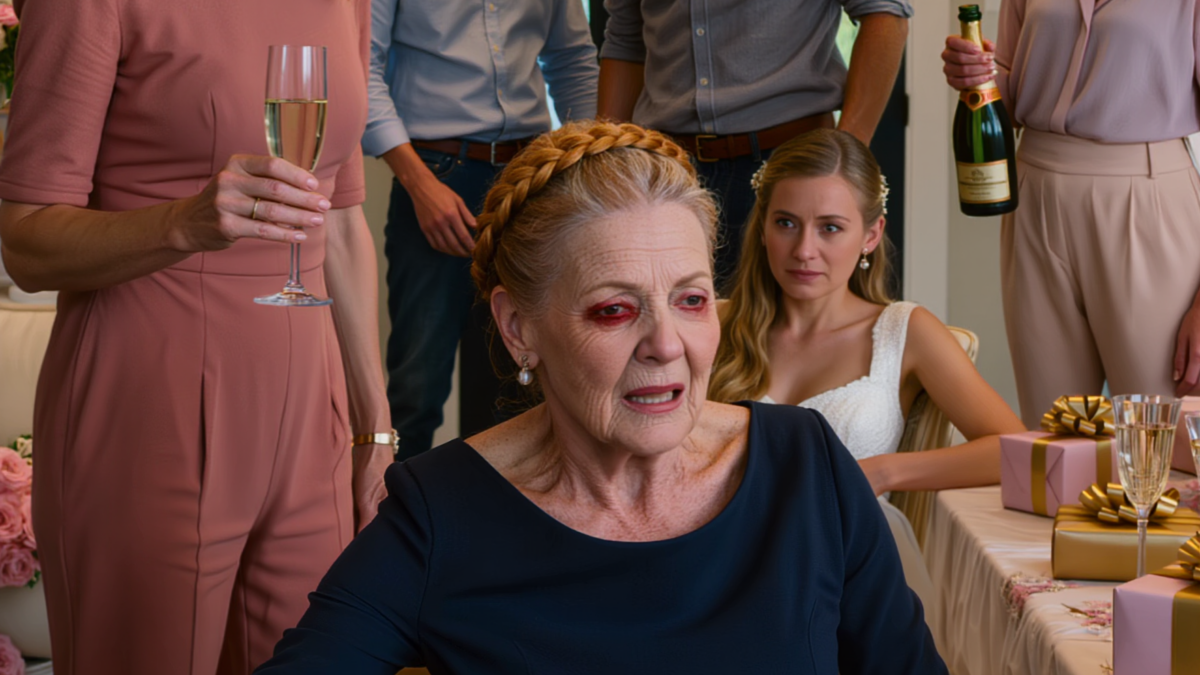
At my daughter-in-law’s sister’s bridal shower, Sloan raised a champagne flute and toasted “the old ATM” while thirty people laughed—including my son. I smiled and left, but one stranger had already thanked me for an airline pass I had never given her, and suddenly the joke wasn’t the strangest thing in that room.
My name is Olivia Ingram, and for thirty-six years I made a living noticing when something did not add up.
I was an aircraft dispatcher for Harborline Airways in Indianapolis. Most passengers never know people like me exist. We worked in rooms without windows, surrounded by weather screens and flight plans, calculating fuel, weight, routes, alternates, and the thousand ordinary things that could become serious if somebody ignored one small discrepancy.
The captain flew the airplane. The dispatcher and captain decided together whether it should leave the gate.
Either one of us could say no.
I had said no more times than I could count.
A thunderstorm building over Missouri. A maintenance item that had been written off too casually. A fuel number that looked technically legal but left too little room for changing weather.
My mechanical pencil had a yellow barrel, and I carried one in my shirt pocket almost my entire career.
Before anything else, I wrote one word on every complicated flight plan.
Alternate.
Weather changes. Runways close. Passengers miss connections. Machines fail. People make mistakes.
You do not control those things.
You make sure you have somewhere else to land.
I thought I had taught that lesson to my son.
It took me until I was sixty-nine to understand that I had mostly been teaching it to myself.
I did not grow up around airplanes.
My father worked on the railroad near Terre Haute, Indiana. My mother cleaned houses. At twenty-one, I was pouring coffee at a truck-stop diner on U.S. 41 and taking night classes whenever I could afford them.
Weather on Tuesdays.
Federal regulations on Thursdays.
I worked doubles and saved quarters.
Six years later, in 1984, I earned my dispatcher certificate.
Harborline hired me in 1985.
For my first four years, I was the only woman working nights in my department.
I learned not to waste time trying to sound important. If the numbers were right, they were right. If the weather was bad, it was bad. If an airplane needed to stay on the ground, I said so.
That habit stayed with me.
So did Raymond.
I married Raymond Ingram in 1986. He taught shop at a high school outside Indianapolis and could repair almost anything that had a hinge, a belt, a motor, or a loose screw.
Our son Gavin was born in May 1988.
Raymond built his crib from white oak.
That crib still sits in my garage.
Raymond died in October 2019.
A heart attack in the school parking lot on a Tuesday.
He was sixty-five and had been planning to retire the following June.
For two years after he died, I kept working because I did not know what retirement was supposed to feel like without him.
On the last day of 2021, Harborline gave me a cake, a plaque, and a card signed by the operations floor.
I appreciated all of it.
The thing that mattered most fit in my palm.
My retiree badge.
Blue Harborline lanyard.
My photograph.
My employee number.
Thirty-six years with the airline gave me lifetime standby privileges. If an airplane had an empty seat, I could usually fly for little more than taxes.
There were also limited friends-and-family listings.
Those were not free. A service fee went to the card on my account.
They were also gifts.
Not merchandise.
I used my own privileges mostly to visit my older sister Winnie in Oceanside, California.
Winnie was seventy-four, sharp enough to make a person confess things they had not done, and capable of growing lemons the size of softballs.
About once a month, I would put on comfortable shoes, hang my lanyard around my neck, and take an early flight to San Diego.
After thirty-six years of planning everybody else’s flights, those trips felt like a quiet reward.
I never thought of the badge as power.
It was just a number on a blue string.
Then my son married Sloan Mercer.
Gavin met Sloan in the spring of 2019. She worked the front desk of a dental office in Fishers and had the kind of personality that made people feel remembered.
She knew names.
Birthdays.
Children.
Which hygienist someone preferred.
At Raymond’s funeral, she stood near the guest book for two hours thanking people as they came through.
I noticed.
I loved her for it.
When Gavin married her on June 12, 2021, I was happy for him.
They held the wedding at a lake pavilion outside Noblesville. Sloan looked beautiful. Gavin looked at her as if someone had switched on a light only he could see.
I paid for the rehearsal dinner.
Forty-two people at an Italian restaurant.
About $4,200.
I did not resent a penny of it.
That was also when I really got to know Sloan’s mother, Rhonda Mercer.
Rhonda owned a salon called Studio 32.
She had a laugh that traveled ahead of her and a habit of gripping your forearm while she talked.
At dinner, she leaned close to me.
“So you’re Mrs. Airline.”
“Olivia is fine.”
“Must be nice flying free forever.”
“It isn’t free, and it’s standby.”
She laughed as if I had made a joke.
Later, Sloan apologized for her.
Her father had left when she was twelve, she explained. Rhonda had raised two daughters alone, working long days at the salon.
“Mom thinks anyone with a pension is rich.”
I understood that.
My own mother had once counted quarters at the kitchen table.
What I did not understand yet was that Rhonda was already doing arithmetic with my life.
Two years later, Sloan came to my kitchen carrying a pale-pink folder.
It was June 2023.
Her son Milo was five months old, asleep in his car seat on the floor.
Gavin was in the garage looking through Raymond’s old tools.
Inside the folder was an application for a $40,000 business loan.
Sloan wanted to start an event-planning company.
Sloan Mercer Events.
Weddings, showers, corporate parties.
“The bank just needs a co-signer,” she said. “It’s basically a formality.”
“It’s not a formality,” I said. “It’s the loan.”
I read every page.
There was no real business plan.
No established clients.
The interest rate was eleven percent.
Payments started in sixty days.
I closed the folder.
“I don’t co-sign loans.”
Her smile remained in place.
“Not for anybody?”
“Not for anybody.”
“Why?”
“My father once co-signed for his brother. After my father died, the debt became our problem.”
“This is different.”
“It always feels different.”
I offered to help her build a business plan.
Her smile came back so quickly it made me uncomfortable.
“You’d fuel a stranger’s airplane before helping your own family.”
“I fueled strangers’ airplanes because that was my job.”
“And we’re not your job.”
“No. You’re my family. That’s why I’m saying no.”
She thanked me for lunch.
She hugged me at the door.
I watched her buckle Milo into his car seat through the kitchen window.
She did not look heartbroken.
She looked like a pilot who had been told one runway was closed and was already choosing another.
I remembered that expression years later.
In January 2024, Gavin lost his job.
His company laid off 140 people on one video call.
He drove directly to my house and sat in Raymond’s recliner with his coat still on.
“We’ve got maybe six weeks,” he told me. “Then we can’t make rent.”
Their townhouse cost $2,340 a month.
Three bedrooms.
Milo had his own room with a moon painted on the ceiling.
I thought the rent was too high.
I also thought about being fourteen years old.
My father had died after an accident at the rail yard in 1971.
He had once co-signed his brother’s truck note.
After he died, the payments still had to be made.
My mother paid the truck note before our rent.
Then she missed another rent payment.
And another.
One Saturday in June, a truck backed toward our porch.
My mother sat beside me on the steps with two black garbage bags containing most of what we owned.
She did not cry.
I did enough for both of us.
That summer I made myself a promise.
No child of mine would ever be one missed payment away from losing a home.
So when Gavin told me he needed help, I answered immediately.
“I’ll cover it.”
“Mom—”
“Three months. Until you land somewhere.”
That night I set up automatic bill pay through my credit union.
February 1.
$2,340.
Then March.
Then April.
Gavin eventually found another job as a warehouse systems analyst.
It paid less than his old position, but it was steady.
Nobody asked me to keep paying.
Nobody asked me to stop.
I simply kept doing it.
Month after month.
I told myself it was love.
Some of it was.
The rest was fear wearing love’s coat.
Then, in February 2025, I slipped on ice outside my back porch and broke my right wrist in two places.
For seven weeks, I was in a cast.
Sloan was wonderful during that period.
I say that because it is true.
She brought soup.
She drove me to the orthopedist.
She folded laundry while criticizing my detergent.
When I wanted to visit Winnie in March, I complained that the employee-travel portal was miserable to use one-handed.
“Let me do it,” Sloan said.
So I gave her my login.
On March 14, I wrote the password on an index card with my left hand.
My handwriting looked terrible.
Before giving it to her, I explained the rules.
I was still a dispatcher at heart.
“I get twenty-four friends-and-family listings a year. Your mother. Brooke. You three. Fine. But they cannot be sold. Not traded. Not exchanged for anything.”
“Seriously?”
“Seriously.”
She laughed.
“Got it.”
“And every listing has a service charge.”
“They pay it?”
“It goes on my card.”
“You pay it?”
“I always have.”
She nodded and slipped the index card into her phone case.
In April, my Visa statement showed a Harborline charge.
$38.40.
Rhonda had taken a trip to Tampa.
Fine.
A month later, there were three charges.
I smiled when I saw them.
Good for them, I thought.
By autumn there were considerably more.
One day in October, Sloan came to pick up Milo’s spare car seat.
“Your family’s flying a lot,” I said.
She paused.
“Mom and Brooke discovered Nashville. I’ll slow them down.”
“Don’t apologize. Just be careful.”
She gave me a bright smile.
“Always.”
I accepted that explanation.
Then in January 2026, a man stopped me in the cereal aisle at Kroger.
He looked to be in his sixties, wore an Indianapolis Colts cap, and had frozen pizzas stacked in his cart.
“You’re Olivia, right? Sloan’s mother-in-law?”
“I am.”
“That girl is a lifesaver. Got my boy home from Phoenix at Christmas.”
I assumed he was a friend.
A neighbor.
Some distant connection of Rhonda’s.
I did not ask.
That bothered me later.
Thirty-six years of asking how, and I did not ask a man in a Colts cap one simple question.
How?
Three months later, at Easter dinner, I heard Rhonda talking on the phone near her refrigerator.
“Don’t worry about it,” she said. “The old ATM will cover it.”
The person on the other end laughed.
Rhonda laughed too.
Then she turned and saw me.
No embarrassment.
No apology.
She simply raised a finger toward me as if I were a salon customer who needed to wait.
“Napkins are in the drawer, hon.”
I told myself she must have meant something else.
I became very good at explaining things to myself.
Then came Brooke’s bridal shower.
The invitation arrived on cream cardstock with gold lettering.
Brooke was Sloan’s younger sister.
Twenty-nine.
A pediatric nurse.
Quiet, kind, and probably the gentlest person in that family.
She was marrying a middle-school math teacher named Nate Olsen.
At the bottom of the invitation, somebody had handwritten a note.
Bride Squad flies to San Diego Friday, May 1.
That interested me for one reason.
I was taking the same flight.
Weeks earlier, I had listed myself on Harborline Flight 1147, the 6:55 a.m. departure from Indianapolis.
Winnie and I planned to spend the week before Mother’s Day together.
For Brooke’s shower, I bought the pistachio-green stand mixer from her registry.
$289.
I wore a navy dress, my good earrings, and my gray-copper hair braided into the crown I had worn for decades.
Out of habit, I put my retiree lanyard in my purse.
Rhonda’s mailbox had pink and white balloons tied around it.
Inside, the shower looked cheerful.
Cupcakes.
Flowers.
A mimosa bar.
Basketball playing in the den for the men who had retreated there.
Rhonda looked at my gift box when I arrived.
“Look who drove herself. Airline didn’t send a plane?”
“Just a Buick today.”
She laughed and carried off the mixer.
Then a woman I had never seen walked straight toward me.
Blonde hair.
Pink glitter sash.
Big smile.
“You must be Olivia. I’m Jackie Dorsey. Rhonda does my color.”
“Nice to meet you.”
“Thank you for the pass. See you at the gate Friday.”
She squeezed both my hands and left.
I stood there for several seconds.
I had never listed Jackie Dorsey for anything.
I had never heard her name.
That was what dispatchers call a discrepancy.
Small.
Specific.
Not yet an emergency.
Something you do not sign off on until you understand it.
I sat near the gift table.
And I watched.
Brooke opened presents.
Nate sat on the arm of her chair.
Rhonda moved around refilling glasses.
Sloan stood near the fireplace in a pink jumpsuit with a folded index card in one hand.
Gavin leaned in the den doorway holding a beer.
At 2:50, Sloan tapped her champagne flute with a spoon.
“Okay, everybody. Maid-of-honor speech.”
She was good at speeches.
She told stories about Brooke as a child.
Brooke cried.
People laughed.
Nate kissed her hair.
Then Sloan raised her glass.
“And now the best part. Friday morning, nine of us fly to San Diego.”
Women cheered.
“For basically nothing,” Sloan continued, “because some of us married into aviation royalty.”
People laughed.
Several heads turned toward me.
Sloan found me beside the gift table.
She tipped the glass in my direction.
“So thank you, Olivia. Here’s to the old ATM.”
The laughter was not loud.
That made it worse.
It sounded comfortable.
Practiced.
Like they had laughed at the same joke before.
Rhonda threw her head back.
Jackie clapped.
Brooke laughed uncertainly, then looked at me and stopped.
My son laughed too.
Then Gavin saw my eyes on him.
He looked at the carpet.
I smiled.
I had smiled through more difficult things at two in the morning with 140 passengers depending on us.
I could smile now.
I set my club soda down.
I hugged Brooke.
“Congratulations, sweetheart.”
“You’re leaving?”
“I know. Enjoy your party.”
At 3:05, I walked out.
Music started again before I reached my car.
The drive home took about fifty minutes.
I spent it doing arithmetic.
Nine people.
Sloan.
Brooke.
Rhonda.
Four bridesmaids.
Jackie.
That was eight.
Who was nine?
And why was Jackie flying on my pass?
At 4:22, while I sat in my driveway with the engine off, Gavin texted me.
Mom, can you send rent before Friday?
That was all.
I read the message twice.
Then I typed:
The ATM is out of service.
His reply came within a minute.
She was joking, Mom. Come on.
Then Sloan texted.
Wow. Over a joke.
I turned the phone over and went inside.
At 6:10, Rhonda left me a voicemail.
“Olivia, hon, don’t be dramatic. It was a toast. Everybody loves you. Rent’s due Friday. Just send it and we’ll all forget this.”
I saved the message.
Not because I had a plan.
Because Rhonda knew the due date.
That bothered me.
I sat at the kitchen table where Sloan had once placed the $40,000 loan application.
Three facts were now sitting open in front of me.
The Colts-cap man.
Jackie.
Nine people flying Friday.
Then I remembered the Visa statements.
I pulled them from the drawer.
April through December 2025: twenty-four travel charges.
January through April 2026: fourteen more.
Thirty-eight listings.
I could explain eleven.
That left twenty-seven.
I opened my laptop.
At 9:40, I logged into Harborline’s retiree portal.
The password Sloan had used still worked.
I clicked PASS RIDER HISTORY.
At the top:
Employee 40117. Ingram, Olivia. Retired.
I read every line.
Rhonda.
Brooke.
Gavin.
Sloan.
Milo.
Those were expected.
Then came strangers.
Tyler Grubb.
Jennifer Pike.
Two Dillard brothers.
Crystal Flynn, four trips to Las Vegas.
Twenty-seven people I did not recognize.
Relationship:
Friend.
Every time.
Then I reached the pending section.
Friday, May 1, 2026.
Flight 1147.
Indianapolis to San Diego.
Sloan.
Brooke.
Rhonda.
Four bridesmaids.
Jackie Dorsey.
Kimberly Allers.
Nine listings.
My employee number.
My card.
I removed my badge from my purse.
Same number.
For thirty-six years, I had treated that number like a signature.
Now it was attached to strangers.
I still did not feel angry.
I felt awake.
There was one question left.
Were they simply being given away?
Or was someone selling them?
I searched Facebook.
Eleven minutes later, I found a public travel group.
Sloan Mercer Events had posted five days after I gave Sloan my password.
Standby passes available. Domestic anywhere. $175 per person per way. DM me. Groups welcome.
There were hundreds of comments.
One read:
Got my son home from Phoenix. Total lifesaver.
The profile photo showed the man from Kroger.
Then I found Rhonda.
Worked great for my girls at the salon.
Twenty-seven strangers at $175 each.
$4,725 collected.
And I had paid every airline service charge myself.
I opened Harborline’s policy.
Section 7 was explicit.
Passes could not be sold, bartered, or exchanged for anything of value.
The employee or retiree whose number was used remained responsible.
The penalty could include permanent loss of privileges.
My privileges.
My trips to Winnie.
Thirty-six years attached to a benefit that could disappear because somebody had turned my account into a business.
Then I found Section 7.4.
Self-disclosure.
A retiree who reported third-party misuse within seventy-two hours of discovering it and cooperated fully would not be penalized for that misuse.
I looked at the stove clock.
A little after eleven.
I wrote on my statement:
Found Sunday, 10 p.m.
Report by Wednesday, 10 p.m.
Then I changed my password.
I barely slept.
At 7:00 Monday morning, the Harborline Pass Travel office opened.
I called from my kitchen.
A young employee named Devon answered.
I gave him my employee number and told the story in order.
Thirty-eight listings.
Twenty-seven strangers.
The Facebook advertisement.
Nine pending riders on Friday.
The moment I discovered everything.
The moment I changed my password.
He became quiet.
“Ma’am, you’re self-disclosing under 7.4.”
“Yes.”
“I’ve never taken one of these from someone reporting themselves before.”
“Well, now you have.”
He opened case PT-26-419.
Corporate Security would contact me.
When the call ended, I typed a letter.
No emotional speeches.
No insults.
No accusations I could not prove.
Just facts.
Gavin and Sloan,
Beginning today, I will no longer pay your rent.
April was the final payment.
At 11:14 last night, I changed the password to my Harborline travel account.
Sloan, your permission to access that account is withdrawn.
At 7:00 this morning, I reported all friends-and-family listings made under my employee number since March 14, 2025.
That includes twenty-seven riders I have never met and the public Facebook post offering passes for $175.
Case number PT-26-419.
Harborline Corporate Security will review every listing, including the nine pending listings for Friday.
I requested repayment of the service charges I had paid for unauthorized riders.
Then I wrote one more thing.
I love Milo.
I will continue paying his preschool tuition, $640 per month, directly to the school.
That does not depend on anything else in this letter.
I am not angry.
I am finished.
Olivia Ingram.
Harborline Airways, retired.
Employee 40117.
Underneath, in pencil, I added:
The ATM is out of service.
I delivered the envelope myself Monday afternoon.
I knew Gavin would be working.
I did not want a confrontation.
I wanted proof they received it.
Sloan opened the door wearing leggings and a sweatshirt.
Her surprise lasted half a second.
Then came the smile.
“Olivia. Here to apologize for leaving?”
“This is for you and Gavin.”
She opened the envelope on the doorstep.
Her eyes moved rapidly at first.
Then slower.
Then they stopped around the third paragraph.
For once, Sloan had nothing to say.
Then she laughed.
A small, bright laugh meant for an audience that was not there.
“Harborline doesn’t care about a few passes. Everybody does it.”
“Then you have nothing to worry about.”
She closed the door.
At 3:30, Corporate Security called.
The investigator’s name was Renee Kowal.
She had a low, calm voice.
I answered eight questions.
Then I told her I had warned Sloan about Friday.
“That’s fine,” Renee said. “But do not cancel the listings.”
“Why?”
“If we cancel them now, the seller can claim nothing happened. If the riders appear, we can document how they obtained the listings.”
Then she asked, “You’re on Flight 1147 too?”
“Yes.”
“Meet me at Gate B9 at 5:45 Friday morning.”
Gavin arrived Tuesday evening.
He entered through my garage the way he had for years.
He found me making chili.
“What is this?”
He held up my letter.
“It’s a letter.”
“It was one joke, Mom.”
“Sit down.”
He did not.
“Sloan’s been crying since yesterday. Rhonda’s furious. Brooke keeps texting about Friday.”
“Has Sloan shown Brooke the letter?”
He stared at me.
“Why would she?”
I waited.
Then he changed subjects.
“Just send May’s rent. We’ll talk after that. I’ll make her apologize.”
“You cannot make Sloan do anything.”
“We’ll lose the townhouse.”
“Then you’ll rent a smaller one.”
“With a three-year-old?”
“I did it at fourteen with two garbage bags.”
He stopped moving.
I had never told him that part of my childhood.
Not fully.
Then he repeated what Sloan had told him.
“She said you gave her permission to use the passes for family.”
“She said the twenty-seven people were family?”
He frowned.
“Twenty-seven?”
I turned the laptop toward him.
“Come look at my family.”
He read the rider history.
Fast at first.
Then slower.
Tyler Grubb.
Jennifer Pike.
The Dillard brothers.
Crystal Flynn.
Friend.
Friend.
Friend.
Twenty-seven times.
Then I showed him the Facebook post.
His eyes stayed on Rhonda’s comment.
“I didn’t know,” he said.
“I believe you.”
And I did.
Gavin had never been much of a liar.
His problem was different.
He lived beside lies and rarely opened the door to see who was there.
“Where did you think Sloan’s business income came from?”
“She said she had clients.”
“She did. Twenty-seven of them.”
Gavin finally sat down.
After a long silence, he returned to the rent.
“We’ll still lose the townhouse.”
“Milo’s preschool is paid. Directly.”
“So you’re punishing him.”
“No. I’m feeding Milo. I’m not feeding the lie.”
He left without eating.
At the doorway, he stopped.
“They’re still going Friday.”
“I know.”
“Are you stopping them?”
“No.”
He turned.
“Then what are you doing?”
“I’m going to San Diego.”
Wednesday morning, a friend from church sent me a screenshot.
Rhonda had posted publicly.
She used an old picture of Milo.
Her caption claimed I would rather see my grandson lose his home than help my own family.
She mentioned my airline career.
My pension.
The rent.
She did not mention the passes.
By noon, dozens of strangers and acquaintances were arguing about my character.
I did not reply.
I called Renee and read the post.
“Does she mention the travel passes?”
“No.”
“Of course not,” Renee said. “They want the argument to be about rent so nobody asks about Friday.”
That evening, Sloan appeared at my door with Milo.
He wore dinosaur pajamas.
“He wanted Grandma.”
Of course he did.
He ran to the hook near my back door and pulled down my blue lanyard.
He sat on the kitchen floor tracing the number.
“Four-zero-one-one-seven.”
“Good reading,” I told him.
Sloan stayed standing.
“You’re making my mother look crazy.”
“Your mother is managing that without me.”
“Gavin says you showed him everything.”
“Yes.”
“Everybody sells those passes, Olivia. It’s a gray area.”
“It’s a forty-page policy with numbered sections.”
“You barely use them. You fly to California once a month. The rest just sit there.”
“They’re mine.”
Her face changed.
The smile disappeared.
Then, for the first time, she said the thing underneath everything else.
“June 2023. You sat at this table and told me no.”
The $40,000 loan.
“You had the money,” she said.
“I did.”
“You just didn’t want me to have it.”
“I didn’t want to co-sign your loan.”
“So I decided I’d get it another way.”
She smiled again.
“And I did.”
Milo looked up at the change in her voice.
Then back at my badge.
Sloan lifted her chin.
“The flights still show listed. I checked. Harborline doesn’t care.”
“Then you have nothing to worry about Friday.”
“We don’t.”
She took Milo home.
My badge remained on the counter beside the sugar bowl.
I sat on my porch that night with decaf cooling between my hands.
For decades, I had told myself I paid Gavin’s rent because I was protecting him.
But my mother had faced real disaster.
Gavin had a job.
He had chosen a townhouse he could no longer comfortably afford.
His child’s preschool was paid.
Nobody was putting his belongings into garbage bags.
He was not one missed payment from the street.
He was one missed payment from a smaller apartment.
For twenty-seven months, I had not been paying for his safety.
I had been paying for my fear.
And somebody had learned how to use it.
The next morning, I opened a 529 college savings account for Milo.
Then I set an automatic transfer.
$2,340 a month.
The exact amount I had been spending on rent.
If I wanted to help my grandson, I could help him without financing adults who treated my help as an entitlement.
Winnie called Thursday.
“You’re still coming?”
“Yes.”
“Good. Bring sunscreen.”
“How did you know something was wrong?”
“You’ve said ‘fine’ four times in two days. You only say fine when the radar is red.”
My sister knew me.
I packed.
Two blouses.
A sweater.
Sunscreen.
A paperback.
My olive utility jacket.
My retiree badge.
Then I did what I always did.
I filed an alternate.
If I did not clear on 1147, another flight connected through Denver.
If Sloan made a scene, I would not raise my voice.
If none of them appeared, I would board quietly and never say another word.
That was the outcome I wanted.
It was not the one I expected.
I arrived at Indianapolis International Airport before five Friday morning.
Concourse B was still waking up.
Coffee shutters were opening.
Floors reflected overhead lights.
Gate B9 came into view at 5:40.
Renee Kowal stood near the podium in a gray blazer with a tablet.
Beside her was the lead gate agent, Jerome Watts.
Jerome recognized my name.
“Dispatcher Ingram?”
“Retired.”
“I heard you on the ops line for twenty years.”
“And you argued with me about gate holds.”
He grinned.
“You told me no a lot.”
“Somebody had to.”
At 5:58, laughter echoed down the concourse.
Nine women appeared in matching pink accessories with white luggage.
Rhonda led them.
Brooke walked in the middle.
Sloan saw me first.
She slowed.
Her eyes moved from my lanyard to Renee’s blazer.
Then she walked toward me.
“Come to say sorry?”
“I came to fly.”
Rhonda put a hand on Sloan’s shoulder.
“Ignore her. She came to make a scene.”
“I came to see my sister.”
Brooke looked between us.
“What’s going on?”
Sloan smiled.
“Nothing. We’re fine.”
Above the podium, the screen displayed Flight 1147.
San Diego.
On time.
The standby list appeared beneath it.
My name was near the top.
Nine additional names appeared below.
Beside each was a small code.
REF.
Referred.
At 6:20, Jerome made an announcement.
“Standby passengers, please see an agent at the podium.”
He called my name first.
Then Sloan.
Brooke.
Rhonda.
Jackie.
Kim.
The bridesmaids.
Nine women gathered around the counter.
Sloan held out the digital boarding pass on her phone.
Jerome did not take it.
Renee stepped forward.
“Good morning. Harborline Corporate Security. I need to ask each of you one question.”
Jackie happened to stand closest.
Renee looked at her.
“This listing is under a retiree’s employee number. How did you obtain it?”
Jackie gave a confused laugh.
“From Sloan. I paid her.”
“How much?”
“$175. Venmo.”
She showed her phone.
Renee recorded it.
Kim answered next.
Same arrangement.
Rhonda had told her about the deal at the salon.
Then the bridesmaids.
One had paid $180.
Another said Sloan described the payment as an airline fee.
Then another.
And another.
Brooke held her phone against her chest.
When Renee asked her, her voice changed.
“$180. Sloan told me Olivia gave us the passes. She said that was the fee.”
Renee nodded.
Then she asked Rhonda.
Rhonda pushed her sunglasses into her hair.
“That’s none of your business.”
“It’s Harborline’s business.”
“My daughter handled it.”
“Thank you.”
Finally, Renee faced Sloan.
Sloan did not wait for the question.
“They’re family passes. Olivia gave me permission to list family.”
Renee looked at me.
“Mrs. Ingram?”
“She had permission for family. No money from anyone. Ever.”
“She’s lying,” Sloan said.
Renee nodded toward Jackie and Kim.
“Are these two women your family?”
Sloan opened her mouth.
Nothing came out.
Brooke turned to Jerome.
“What does one of these passes actually cost? The fee, I mean.”
Jerome checked his screen.
“$38.40 one way.”
“Who pays it?”
“It goes to the employee’s card on file.”
He looked toward me.
“In this case, the retiree.”
Brooke stared at Sloan.
“You charged me $180 for my own bachelorette trip, and Olivia paid the fee?”
“Brooke—”
“You charged Hannah.”
Silence spread through the group.
“You charged Megan.”
One bridesmaid looked down at her fingers, silently calculating.
“You told me Olivia offered.”
I spoke once.
“I pay the fees. I always have.”
Brooke covered her mouth.
Renee looked at her tablet.
“Since March 2025, thirty-eight listings were created under Mrs. Ingram’s number. Twenty-seven were for people outside the family. We also have the public post advertising them for sale.”
Then she looked directly at Sloan.
“Mrs. Ingram reported the misuse herself Monday morning within the self-disclosure period.”
Something changed in Sloan.
The charm disappeared.
“She’s the old ATM,” she said.
Her voice carried through the quiet gate area.
“That’s what she is. A pension. A paid-off house. She barely spends anything.”
Brooke touched her arm.
“Sloan.”
“No. She had forty thousand dollars when I asked for help and told me no.”
Rhonda stepped beside her.
“Twenty-three hundred a month is nothing to her. Nothing.”
Jerome spoke calmly.
“These are travel passes, ma’am. They aren’t tickets.”
Rhonda snapped toward him.
“Nobody asked you.”
Phones had begun appearing around the gate.
Travelers who had been minding their own business were now watching.
Sloan stepped close to me.
“Say something.”
I could smell vanilla perfume.
“You always have something to say. Say it.”
I thought of Sloan standing beside Raymond’s funeral guest book.
I thought of the pink loan folder.
I thought of Milo tracing my employee number on the badge.
Then I answered.
“The ATM is out of service.”
I said it quietly.
The same tone I had once used when telling captains to hold at the gate.
Sloan lifted one hand in frustration.
Renee stepped between us.
“Lower your voice, please.”
Sloan did.
Renee returned to her tablet.
“All nine listings are void.”
Rhonda sat heavily in a gate chair.
Renee continued.
“Sloan Ingram and Rhonda Mercer are permanently barred from Harborline pass travel. Written notice will follow.”
Then she faced me.
“Mrs. Ingram, your self-disclosure is accepted. No sanction on your privileges.”
The other seven women had not been selling the listings.
They were permitted to purchase regular fares if seats remained.
Jerome checked.
$389 one way.
Six seats left.
Jackie and Kim declined.
Brooke took out her credit card.
“One.”
The bridesmaids began doing the same.
Then Brooke turned to her sister.
“Don’t buy one.”
Sloan blinked.
“What?”
“I mean it. Don’t come.”
Sloan stood beside the podium with a boarding pass glowing uselessly on her phone.
Rhonda sat nearby with her shoes off and a neck pillow in her lap.
A few minutes later, Jerome called my name.
“Olivia Ingram. Seat 14C.”
Middle seat.
A Navy recruit on one side.
A sleeping man on the other.
I had flown worse.
I was buckling my seat belt when Gavin texted from the cell-phone lot.
I knew about the name, Mom. I didn’t know about the money.
I read that several times.
Then answered:
I know, honey.
You laughed at both.
The typing dots appeared.
Disappeared.
Did not return.
At 6:47, the cabin door closed.
I switched off my phone.
The rest moved quickly.
Brooke requested refunds from Sloan.
By Monday night, $1,250 had been returned.
Gavin later told me it came from money Sloan had saved toward opening a storefront.
Harborline sent written confirmation that my travel privileges remained intact.
Sloan and Rhonda were barred from pass travel.
The previous twenty-seven riders received notices explaining that the listings connected to them were under review.
Rhonda deleted her post about me.
Sloan’s travel-pass advertisement disappeared too.
Apparently somebody had asked beneath it whether she was the woman from the video circulating from Gate B9.
I spent Mother’s Day in Oceanside.
Winnie and I sat on her patio eating lemon bars made from fruit she had grown herself.
When I finished telling her everything, she laughed until she had to put down her tea.
“Out of service,” she said. “Daddy would have loved that.”
Sloan repaid the service charges in two installments.
No note.
Brooke married Nate in June.
Sloan was no longer maid of honor.
She sat in the fourth row beside Gavin and Milo.
At the reception, Brooke hugged me.
Then she whispered, “You’re the only person who told me the truth.”
On July 1, Gavin and Sloan moved into a two-bedroom apartment in Noblesville.
Rent was $1,590.
Milo’s new bedroom did not have a moon painted on the ceiling yet.
He survived.
So did they.
Eleven days later, Gavin came to lunch alone.
He did not ask for money.
He ate two bowls of chili.
Then he asked about 1971.
So I finally told him everything.
My father.
The rail yard.
The truck debt.
My mother sitting on a porch beside two garbage bags while I held her hand.
Until then, Gavin had only heard fragments.
I had thought hiding the memory protected him.
Instead, I had been carrying the fear for both of us and quietly making him pay for it in another way.
“I thought you just liked helping,” he said.
“I did.”
I looked down at my bowl.
“I also liked not being afraid.”
He nodded.
My son is still learning to remain in uncomfortable conversations instead of finding someone else to carry them.
It is a late lesson.
It is not too late.
Milo’s preschool tuition still goes directly to the school every month.
$640.
His college account receives $2,340—the same amount I once sent toward his parents’ townhouse.
By eighteen, that money should do considerably more for him than paying rent on rooms he will barely remember.
My blue Harborline lanyard hangs on the hook beside my back door again.
I still fly to see Winnie.
I still carry a yellow mechanical pencil.
And every time I travel, I still file an alternate.
The only real difference is that I no longer let somebody else hold the pencil.
Generosity is a choice made each time you give.
The moment another person begins treating that choice like a machine they are entitled to operate, closing it is not cruelty.
Sometimes it is simply the first accurate decision you have made in a very long time.