At a family dinner three weeks before my daughter’s wedding, my future in-law blamed me for turning money into control. I placed the contracts on the table. Then her own sister-in-law leaned forward and asked, “What about the $25,000?” Her husband stopped eating. “What $25,000?”
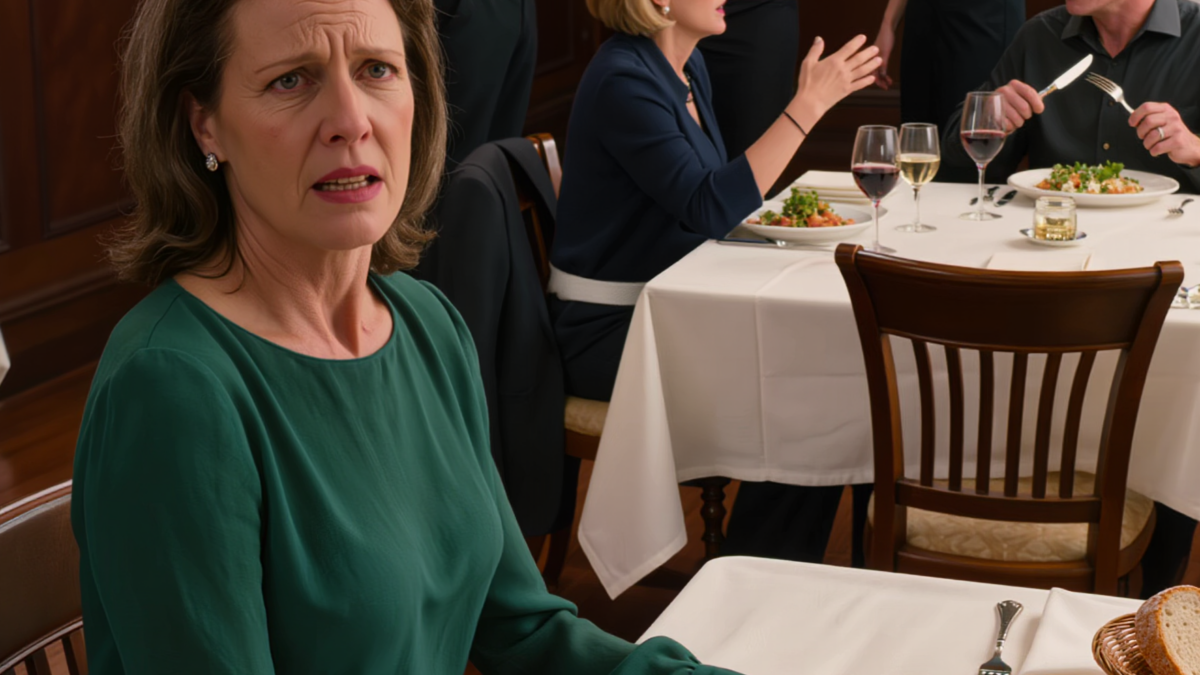
Three weeks before my daughter’s wedding, she called to tell me her future mother-in-law would be sitting with the family and I could come as a guest.
I was also paying for most of the wedding.
My name is Linda Parker. I was fifty-two then, divorced, living in a two-bedroom townhouse in northwest Columbus, Ohio, and working payroll for a medical supply company.
The Tuesday Emily called had been painfully ordinary until 6:43 p.m.
I remember the exact time because I was sitting in my Honda CR-V outside a Kroger in Dublin. Milk was warming in the cargo area, and I had placed a rotisserie chicken on the passenger-side floor because the plastic container had leaked on my seat once before and I had learned from experience.
“Hey, Mom.”
“Hey, honey. Everything okay?”
“Yeah. Just wedding stuff.”
There had been a lot of wedding stuff lately.
Emily was twenty-eight, an elementary school teacher, and she was marrying Jason Reed in twenty-one days. Jason was thirty-one and worked in sales at a Toyota dealership.
I liked Jason.
His mother, Denise, was more complicated.
She was never openly rude. That would have been easier. Denise was polished enough to say something cutting with such a pleasant smile that you could spend the next ten minutes wondering whether you had imagined the insult.
Emily talked about centerpieces first. Then the rehearsal dinner. Then the seating chart.
“There’s one thing,” she said.
I could hear traffic behind her.
“What?”
“Denise thinks the front family table is going to be crowded.”
I waited.
“So we moved a few people.”
“Okay.”
Another pause.
“Denise is going to sit with the family.”
I actually smiled because I still did not understand.
“Of course she is.”
“And we’re putting you at table twelve.”
I stared through my windshield at a man pushing two grocery carts toward the entrance.
“Who’s at table twelve?”
“Some of your friends. Aunt Cheryl might be over there.”
“Emily, where are you sitting?”
“The family table.”
“And Jason?”
“Yes.”
“And Denise?”
“Yes.”
I tightened my hand around the steering wheel.
“So what exactly am I?”
Her answer came too quickly.
“You can come as a guest.”
For a second I honestly thought I had misunderstood.
“I’m your mother.”
“I know that.”
“Apparently I’m confused.”
“Mom, please don’t do this.”
“Do what? Ask where the bride’s mother is supposed to sit?”
She sighed.
“Denise has done so much for us. She’s basically become a second mom to me.”
I ran my thumb across a scratch on the steering wheel.
“And I’m what? The first draft?”
“That’s not what I said.”
“No. You said I’m a guest.”
Silence.
Then Emily said, “It’s one table. I knew you’d make it bigger than it is.”
That was the moment something shifted.
Not because of Denise.
Because Emily sounded relieved when I stopped arguing.
“That’s fine,” I said.
“Really?”
The relief in that single word hurt more than the seating arrangement.
“Yes, Emily.”
“Oh. Okay. Thank you.”
We ended the call.
I sat in that parking lot for another five minutes before driving home.
I didn’t cry until I was unloading groceries.
There was nothing graceful about it. I was standing in my kitchen holding a bag of shredded cheddar when tears started running down my face.
For most of Emily’s life, money had been the easiest way for me to help her.
After her father, Tom, and I divorced, I covered what I could.
College books.
The deposit on her first apartment.
A transmission repair.
A dental crown her insurance barely covered.
When she got engaged, I told her I had wedding savings.
I wasn’t wealthy.
I had simply been saving for seven years.
That night, instead of eating dinner, I opened my Dell laptop and pulled up the wedding spreadsheet.
Venue and catering package: $31,000.
Photographer balance: $3,800.
Florist.
Transportation.
Smaller deposits.
I stared at the total.
Then I realized something I should have noticed months earlier.
My daughter was treating me like a guest at an event I was financially responsible for hosting.
At 8:14, I called Megan Ellis, the coordinator at the barn venue outside Dublin.
“Hi, Megan. It’s Linda Parker.”
“Hi, Linda. We’re almost there.”
“That’s actually why I’m calling.”
I swallowed.
“If the person who signed the contract no longer wants to host the event, what happens?”
She went quiet.
“Is everything okay?”
“I just need to understand the contract.”
She walked me through it.
Canceling this late would cost me several thousand dollars. Some deposits were nonrefundable. If the venue could rebook the date, I might recover more, but there were no guarantees.
“Linda,” she said carefully, “do you want me to cancel?”
I looked toward Emily’s school picture on my bookshelf.
For about ten seconds, I nearly said no.
Thirty-one thousand dollars was not simply a number to me.
It represented packed lunches, vacations I didn’t take, a couch I kept because it still worked, an aging car I maintained instead of replacing.
More importantly, Emily was my only child.
What if she never forgave me?
Then I heard her voice again.
You can come as a guest.
I asked Megan one more question.
“Can Emily still have her wedding if she makes her own arrangements?”
“Of course. You’re only canceling the services contracted under your name.”
That mattered.
I wasn’t canceling her marriage.
I wasn’t taking anything she had personally paid for.
I was stepping away from financial obligations that belonged to me.
“Cancel it.”
Megan emailed the form.
My hand shook when I clicked confirm.
Then I contacted the other vendors and stopped every unpaid charge still legally under my name.
When I finished, it was 8:56.
I finally reheated some chicken.
At 9:02, my phone rang.
Emily.
I let it ring.
At 9:05, she called again.
Then Jason.
Then Emily.
A text appeared.
Mom, what did you do?
Another followed.
Call me now.
By 9:40, I had eleven missed calls.
I wasn’t enjoying any of it.
I sat at my kitchen table wondering whether I had destroyed my relationship with my daughter over a chair.
Twice I picked up the phone.
Twice I put it back down.
At 10:17, Emily called for the seventeenth time.
I watched her name disappear from the screen and turned my phone facedown.
For twenty-eight years, whenever my daughter had a problem, my first instinct had been to fix it.
That night, for the first time, she had a problem I was not rushing to pay for.
The next morning, at 7:12, someone started pounding on my front door.
Not knocking.
Pounding.
I had barely poured my first cup of coffee.
Through the peephole I saw Emily standing on my porch with Jason behind her. She still wore the gray cardigan she usually wore to school, but her hair was pulled into a messy ponytail and she looked like she had not slept.
I opened the door.
“How could you do this?”
Jason gave me an exhausted look.
“Hello, Linda.”
“Hi, Jason.”
“Maybe we should go inside.”
Emily walked past me before I invited her.
“You canceled my wedding.”
“No,” I said. “I canceled what I was paying for.”
She turned around.
“That’s the same thing.”
“No, honey. That’s exactly the problem.”
Jason closed the door behind him.
I poured him coffee because apparently thirty years of Midwestern manners do not disappear just because your family is falling apart.
“Thank you,” he said.
Emily stared at both of us.
“The venue called me last night. The photographer emailed this morning. Do you understand what you’ve done?”
“I understand exactly what I did.”
“You’re punishing me because I love Denise.”
That genuinely surprised me.
“This isn’t about loving Denise.”
“Then what is it about?”
“You told your mother she could attend her daughter’s wedding as a guest while expecting her to keep paying for it.”
Emily folded her arms.
“It was a seating arrangement.”
“Then changing who pays shouldn’t matter either.”
Jason stared into his coffee.
Emily’s eyes filled.
“Mom, the wedding is three weeks away.”
That was what made the whole thing difficult.
If she had been a stranger, saying no would have been easy.
But this was the same little girl I had once driven to Nationwide Children’s Hospital in the middle of the night when she was eight and desperately ill.
Her college graduation photograph sat twelve feet away.
I wanted to reach for her.
Instead, I gripped the edge of the counter.
Jason finally spoke.
“Linda, can anything be reversed?”
“Probably some of it.”
Emily’s expression changed.
For one foolish second, I almost gave in.
Then she said, “Denise warned me you’d make this about money.”
My hand stopped.
“What?”
Emily looked away.
“Denise knows you’ve helped.”
“Helped?”
Jason shifted uncomfortably.
I looked at him.
“How much do you think I contributed?”
He hesitated.
“I don’t know.”
I walked to my desk and brought back the wedding folder.
“The venue and catering package alone was thirty-one thousand.”
Jason blinked.
“Thirty-one?”
“Plus the photographer balance, florist, transportation and several smaller expenses.”
He turned toward Emily.
“You told me your mom was covering the venue deposit.”
“I never said just the deposit.”
“You kind of did.”
Emily’s cheeks reddened.
I did not enjoy watching them argue.
I closed the folder.
“I have to leave for work.”
“That’s it?” Emily asked.
“For this morning, yes.”
She grabbed her purse.
At the door, she turned.
“You’ve ruined everything.”
That one landed.
After they left, I sat in my car for several minutes before starting it.
At work I made two payroll corrections, answered six emails and accidentally entered the same employee’s overtime twice.
My coworker Janet eventually leaned over the cubicle divider.
“You okay?”
“Wedding stuff.”
She had three grown children.
She nodded as though that explained everything.
Around lunch, my sister Cheryl texted me.
Call me when you’re alone.
I went to my car.
“What happened?”
“I think you need to see something.”
She sent me three screenshots from Facebook.
The first was one of Denise’s posts.
It showed Emily trying on her wedding dress.
The caption praised how happy Denise was that they could give Jason and Emily the wedding they deserved.
Underneath, relatives had written comments congratulating Denise.
You’re amazing parents.
What a beautiful gift to the kids.
You’ve outdone yourself.
Denise had answered with hearts.
Not once had she mentioned me.
Another post celebrated the champagne wall.
I remembered that ridiculous thing.
Seven hundred eighty dollars for a decorative wall covered in artificial greenery where guests could grab glasses during cocktail hour.
Denise had insisted it would elevate the reception.
Apparently my money needed bubbles.
I laughed once at the thought and then felt guilty for laughing.
Cheryl stayed on the phone.
“Did Denise pay for all this?”
“No.”
“How much did she pay?”
“I honestly don’t know.”
That bothered me more than the posts.
I had been so busy signing checks that I had never asked what the Reeds were actually contributing.
That evening Tom called.
My ex-husband and I were not close, but twelve years after our divorce we had reached the point where we could discuss Emily without reopening ancient arguments.
“She called me,” he said.
“I figured.”
“She says you’re canceling everything.”
“I’m canceling what I signed for.”
He sighed.
“I understand why you’re angry.”
“There’s a ‘but’ coming.”
“There is.”
I waited.
“You can be right and still lose your daughter.”
I hated him a little for saying it because I had been thinking the same thing all day.
After we hung up, I opened Megan’s email again.
Maybe I could call.
Maybe the date was still available.
Maybe I could put everything back exactly the way it had been.
Before I decided, Megan called me.
“Linda, I was going through the event file. There’s something I thought you should have.”
She forwarded an email.
It had been sent to the venue eleven days earlier.
From Denise.
Subject: Revised Family Seating.
I read it twice.
Denise had requested changes to the front tables and asked the staff to coordinate directly with her.
Near the bottom was one sentence.
Linda Parker, the bride’s mother, will still be attending, but she won’t need placement with the immediate family.
Attending.
Not hosting.
Not mother of the bride.
Attending.
I checked the date again.
Eleven days earlier.
This had not happened because the family table suddenly became crowded.
It had been discussed.
Planned.
Emily had waited until three weeks before the wedding to tell me.
I closed the laptop.
For the first time since canceling the venue, I stopped wondering whether I had imagined the disrespect.
The next afternoon, Jason’s aunt Carol called me.
“Linda, what happened to Denise’s twenty-five-thousand-dollar wedding fund?”
I did not answer.
Not because I was hiding something.
Because until that moment, I had never heard of it.
“I’m sorry, Carol. What wedding fund?”
There was silence.
I was sitting in my car outside my office on West Belt Drive, eating a turkey sandwich I had packed that morning.
Suddenly I wasn’t hungry.
Carol lowered her voice.
“Denise said she and Robert put twenty-five thousand toward the wedding.”
Robert was Jason’s father.
I put the sandwich back into its container.
“When did she say that?”
“Months ago. Easter, I think.”
“Did she tell you what they used it for?”
“Not specifically.”
Then Carol told me something stranger.
Several members of the Reed family had given Denise smaller amounts to help with wedding expenses.
Five hundred dollars here.
A thousand there.
Carol herself had contributed $750.
“I assumed it all went into the same wedding fund.”
I chose my words carefully.
“Carol, I’m not accusing Denise of anything. I don’t know what she paid for.”
“I understand.”
“But I’ve never seen a $25,000 contribution.”
A long pause.
“Well,” Carol said, “that’s interesting.”
Interesting was not the word I would have chosen.
That evening, Emily came over alone.
She did not sit down.
“Why are you calling Jason’s family about money?”
“I’m not. Carol called me.”
Something changed in her expression.
Small.
But enough.
“You know about the twenty-five thousand.”
She rubbed her forehead.
“Mom, please.”
“That isn’t an answer.”
“Denise says things.”
“What does that mean?”
“She exaggerates.”
“By twenty-five thousand dollars?”
Emily walked toward my kitchen window.
“She wanted people to think they were contributing more.”
“And you knew?”
“I knew she made it sound bigger.”
That hurt differently.
“How much did she actually contribute?”
Emily hesitated.
“I don’t know exactly. They’re paying for the rehearsal dinner. Denise bought the favors. She paid for part of my shower.”
Those things mattered.
They were real contributions.
But they were not $25,000.
“Did Jason know what I paid?”
“Not all of it.”
“Why?”
She turned.
“Because every conversation becomes about who paid for what.”
“No. This conversation became about money after you told the person paying the bills she wasn’t family.”
She looked exhausted.
“I was trying to keep everybody happy.”
I almost laughed.
“You weren’t keeping everybody happy. You were choosing the person who made it hardest to say no to.”
Emily picked up her purse.
“We’re trying to find another venue.”
“I hope you do.”
She looked surprised.
I meant it.
I did not want her wedding destroyed.
I wanted her expectations corrected.
Two days later, Megan called to tell me the barn had another couple on a waiting list who wanted our Saturday.
That reduced my financial loss.
I still lost several thousand dollars in administrative fees and nonrefundable expenses.
When I saw the final figure, I sat at my kitchen table feeling sick.
That money represented years of small choices.
Coffee from home instead of Starbucks.
Keeping old furniture.
Not upgrading things simply because I wanted something newer.
Revenge sounds clean when someone else tells the story.
Real boundaries can be expensive.
Emily and Jason found a ballroom at a Marriott near the Columbus Zoo after another couple canceled.
It wasn’t the rustic wedding Emily had imagined, but it was available.
More importantly, they had to fund it.
Emily sold a Louis Vuitton bag she had bought secondhand.
Jason started taking Saturday shifts at the dealership.
When Cheryl told me that, I wrote Emily a check for $5,000.
I signed it.
Then I stared at her name.
Every part of me wanted to make the problem disappear.
That had always been my specialty.
I tore the check in half.
Then I tore it again.
Three days later, Jason called.
“Can I come by?”
He arrived around seven carrying a manila folder.
“Emily know you’re here?”
“No.”
I raised an eyebrow.
“That sentence hasn’t been working out particularly well for people lately.”
He smiled despite himself.
“Fair.”
We sat at my kitchen table.
He looked exhausted.
“Linda, I owe you an apology.”
“For what?”
“For not paying attention.”
He opened the folder.
Inside were printed screenshots of text messages between him and Denise.
In one message Denise complained that I was taking over the wedding because my name was on the contract.
Jason had replied:
She’s paying for those things. Mom, of course she’s involved.
Another message from Denise said Emily needed to start building boundaries with Linda before they were married.
Jason answered:
Please stay out of this.
There were more.
He had pushed back on his mother repeatedly.
That surprised me.
I had quietly assumed he had encouraged the situation.
“Does Denise know you’re showing me these?”
“My mother definitely does not.”
I asked the question I did not want answered.
“Then why did Emily go along with her?”
Jason leaned back.
“Emily wants my mom to like her.”
“She already does.”
He rubbed both hands over his face.
“My mom likes being needed.”
That sounded accurate.
“Emily hates conflict,” he continued. “Your daughter will spend three hours worrying about hurting somebody’s feelings.”
“Apparently not mine.”
He winced.
“I know.”
Then he said something I thought about for months.
“Mom makes people work for her approval. You don’t.”
I stared at him.
“So I was easier to disappoint.”
He nodded.
“Yeah.”
It was probably the most honest thing anyone had said since the whole mess began.
Then he slid one more page across the table.
A screenshot from the Reed family group chat.
Denise had written:
After everything Robert and I have put into this wedding, I cannot believe Linda is trying to sabotage it three weeks out.
Carol had replied:
How much did you and Robert put in?
Denise had never answered.
“Aunt Carol started asking questions,” Jason said.
“Good.”
“She wants everybody together before the wedding.”
“Your mother agreed?”
“Yeah.”
I gave him a look.
“That sounds terrible.”
“It probably will be.”
Despite myself, I laughed.
Then Jason became serious.
“Linda, there’s something else.”
Denise had apparently told multiple relatives that she was covering far more than the rehearsal dinner.
The venue.
Flowers.
Transportation.
Some of the same things my name was attached to.
“Do you think she kept the money relatives gave her?” I asked.
“I don’t know. And I don’t want to accuse her until we know.”
That was the right answer.
Anger did not give us permission to turn assumptions into facts.
The following Sunday, both families agreed to meet at an Italian restaurant in Dublin.
Emily called it a chance to clear the air.
Denise called it a misunderstanding.
I called it dinner.
Before leaving home, I put every invoice, payment confirmation, contract and relevant email into one slim black folder.
Not because I planned to humiliate anyone.
I was simply finished arguing about things I could document.
Sunday dinner was at a family-owned Italian place off Sawmill Road.
I arrived at 5:52.
Dinner was at six.
Being eight minutes early gave me enough time to sit in the car and consider driving home.
The black folder rested on the passenger seat.
I was not nervous about Denise.
I was nervous about Emily.
There is a difference between standing up for yourself and enjoying someone else’s embarrassment.
I wanted to stay on the right side of that line.
At 5:57, I went inside.
There were eleven of us.
Emily and Jason.
Denise and Robert.
Carol and her husband.
My sister Cheryl.
Tom had driven up from Cincinnati.
Two other relatives attended too, because apparently nothing improves family tension like an audience.
Denise was already seated.
She wore a navy blouse, pearl earrings and the expression of a woman preparing to chair a committee.
“Linda.”
“Denise.”
I sat across from her.
Emily looked like she would have preferred a root canal.
We ordered drinks.
Nobody touched the bread.
Finally, Emily said, “Can we please just talk?”
Denise folded her hands.
“I agree. I think a lot of this has gotten completely out of proportion.”
I waited.
She continued.
“This whole situation happened because Linda felt that contributing financially gave her control over the wedding.”
Cheryl glanced at me.
I could practically hear her thinking, Don’t throw the bread.
I didn’t.
Instead I said, “Then let’s take money out of it.”
Denise blinked.
I placed the folder on the table.
“Mom,” Emily whispered.
“I’m not here to fight.”
I opened the folder.
“I’m here because people keep saying different things. Numbers are easier.”
I pulled out the original venue contract.
“Venue and catering package. Thirty-one thousand dollars. Contracted to me.”
Then the photographer.
Flowers.
Transportation.
The smaller items.
“When everything is added together, I paid or committed just under thirty-eight thousand.”
Nobody spoke.
Robert looked genuinely surprised.
He turned toward Denise.
“I thought Linda paid the deposit.”
Jason nodded.
“So did I.”
Denise shifted in her chair.
“This is exactly what I mean. We’re sitting here itemizing gifts.”
“No,” I said. “We’re correcting the story.”
Carol leaned forward.
“Since we’re correcting stories, what about the twenty-five thousand?”
Robert frowned.
“What?”
“Twenty-five thousand.”
That was when I knew Denise suddenly had a bigger problem than I did.
Carol looked at her brother.
“Denise told us you two put twenty-five thousand dollars toward the wedding.”
Robert stared at his wife.
“I never said that.”
Denise answered immediately.
“It wasn’t meant literally.”
Carol laughed once.
“How do you metaphorically spend twenty-five thousand dollars?”
Even Tom coughed into his napkin, trying to hide a smile.
Denise’s mouth tightened.
“We’ve contributed in many ways.”
“And that’s fine,” I said.
I meant it.
The rehearsal dinner was not cheap.
Denise had paid for favors and part of Emily’s bridal shower.
This was not a contest over who loved the couple more.
The problem was the fiction.
Carol looked at Denise.
“I gave you seven hundred fifty dollars because you told me you were helping with wedding expenses.”
“It went toward wedding expenses.”
“Which ones?”
“The rehearsal dinner. Decorations. Various things.”
Carol held up a hand.
“Okay. Then that’s where it went.”
That surprised me.
She was not accusing Denise of stealing.
Neither was I.
But now everybody at the table could see how several real contributions had somehow grown into a twenty-five-thousand-dollar family legend.
The server entered carrying salads.
He looked around the room.
“Should I come back?”
Tom nodded.
“Absolutely.”
The poor man disappeared.
Then Denise looked directly at me.
“You still canceled your daughter’s venue because of a seating chart.”
There it was.
Her strongest argument.
And if I was being truthful, it was the part I struggled with too.
“I did.”
Emily looked down.
“And I’ve asked myself every day whether I went too far.”
That seemed to surprise everyone.
“I lost money doing it. Emily lost the venue she wanted. Jason got dragged into something he didn’t create. I’m not proud that any of that happened.”
Denise leaned back.
For half a second, she looked as if she believed the argument was over.
Then I removed one final page.
“But the seating change wasn’t made during Emily’s phone call.”
I slid Denise’s email toward the center of the table.
“You contacted the venue eleven days earlier.”
Emily closed her eyes.
Robert picked up the page.
I did not read the entire message aloud.
I did not need to.
I pointed to the sentence.
Linda Parker, the bride’s mother, will still be attending, but she won’t need placement with the immediate family.
Robert looked at Denise.
“You wrote this?”
“Emily approved the seating.”
Every face turned toward my daughter.
Her eyes filled immediately.
“Yes.”
That single word still hurt, even though I already knew.
“I approved it.”
Nobody rescued her.
Nobody changed the subject.
Nobody tried to smooth it over.
Emily wiped beneath one eye.
“I wanted Denise to stop saying I was letting you control everything.”
“Did you think I was controlling everything?”
“No.”
“Then why didn’t you tell her that?”
Emily stared down at her napkin.
“Because saying no to her turns into a whole thing.”
Jason spoke before I could.
“So you said no to your mom instead.”
Emily nodded.
He did not sound angry.
That somehow made it worse.
She looked at me.
“I knew you’d still show up.”
There it was.
The truth underneath everything.
She thought I was safe enough to hurt.
I closed the folder.
“Emily, I don’t want a better chair because I paid for one.”
My voice cracked.
I hated that.
I stopped for a second.
“I wanted a better chair because I’m your mother.”
Emily covered her mouth.
Denise started to speak.
Jason stopped her.
“Mom, please.”
She looked at him.
He was not smiling.
“This is my marriage. Emily is my wife in a week. You don’t get to decide who counts as her family.”
Denise pushed her chair back.
“I think I’ve been blamed enough for one evening.”
Carol looked at the untouched bread basket.
“Well, before you leave, Denise, I have one question.”
Denise stopped.
Carol pointed toward me.
“If Linda paid for the champagne wall, why have I been congratulating you for it since May?”
There was half a second of silence.
Then Cheryl laughed.
Tom laughed.
Jason tried not to and failed.
Even Emily made a small strangled sound through her tears.
Against every instinct I had, I laughed too.
Denise did not.
Dinner eventually arrived.
Nobody stormed out.
Nobody threw a drink.
Nobody applauded.
Real families usually do not give you movie endings.
Denise stayed, although she barely spoke.
Before we left, Emily followed me into the parking lot.
“Mom.”
I turned.
She looked exhausted.
“I’m sorry.”
I believed she meant it.
But an apology was not going to repair everything beside a row of parked cars.
So I hugged her.
Then I said, “We’ll talk after the wedding.”
She nodded.
I had almost reached my car when she called after me.
“One more thing.”
I turned.
“I changed the seating.”
I nearly smiled.
“Emily, you don’t have to.”
“Yes,” she said. “I do.”
What I did not know yet was that when the wedding day arrived, the seat she chose for me would matter much less than what happened the night before.
At 9:38 the evening before Emily’s wedding, my doorbell rang.
I was already in pajamas.
For one terrible second, I thought something else had gone wrong.
When I opened the door, Emily stood there in sweatpants holding her wedding dress across both arms.
“Please don’t say anything.”
I looked at the dress.
“What happened?”
“The zipper.”
Of course it was the zipper.
After weeks of money, seating charts, canceled contracts, family arguments and one champagne wall that had somehow become a supporting character in my life, the final emergency was a zipper.
“Come inside.”
Emily laid the dress across my dining table.
The zipper had separated near the waist.
“My alterations lady isn’t answering. The bridal shop is closed.”
“And you thought of me?”
She gave me a small embarrassed smile.
“You always know somebody.”
She was not wrong.
My friend Janet from work had been sewing since the seventies.
She had altered both of her daughters’ wedding dresses and once reconstructed most of a bridesmaid gown after someone’s Labrador damaged the skirt.
I called her.
She answered on the fourth ring.
“Somebody better be bleeding.”
“Worse. Wedding dress.”
She sighed.
“Bring it over.”
Twenty-five minutes later, Emily and I were driving through Worthington with her dress stretched carefully across the backseat of my CR-V.
For the first ten minutes, neither of us spoke.
Then Emily said, “I’m sorry.”
“You already said that.”
“I know. I’m saying it again.”
I kept my eyes on the road.
“I let Denise make me feel like every decision was a test,” she said. “If I disagreed with her, I wasn’t respecting Jason’s family.”
“You could have told me.”
“I should have.”
She picked at her thumbnail.
“You were easier.”
I knew exactly what she meant.
Jason had already said it.
Hearing it from my daughter was different.
“I knew you’d forgive me,” she said.
I glanced at her.
“That’s a dangerous reason to hurt somebody.”
“I know.”
That was enough for that night.
Janet repaired the zipper in forty-three minutes.
She refused money but accepted the bottle of wine I bought at Giant Eagle on the way over.
The next afternoon, Emily got married.
The replacement ballroom was not what she had originally imagined.
There were no exposed beams.
No field behind the venue for sunset photographs.
But it was pretty.
White linens.
Simple flowers.
Candles.
They had eliminated luxury transportation, upgraded place settings, elaborate favors and, yes, the champagne wall.
Nobody died.
Jason’s cousin drove them away afterward in his black Chevy Tahoe.
It worked perfectly well.
I did not contribute another dollar.
That mattered to me.
But at eleven that morning, I was still in Emily’s hotel room helping fasten her dress.
Money and love had become tangled together in our family for too long.
I was learning that they did not have to be.
When Emily turned around in that dress, I saw her at six years old for about half a second.
That is what children do to you.
They can be grown adults making decisions that break your heart, and some part of you still remembers Velcro sneakers.
“You look beautiful,” I told her.
She hugged me carefully to protect her makeup.
Then she whispered, “Your seat is next to me.”
I pulled back.
“Emily, you don’t have to prove anything.”
“I’m not.”
She looked directly at me.
“This isn’t because of what you paid.”
Then she smiled slightly.
“It’s because I finally remembered who was here before any of this existed.”
That nearly got me.
I blamed my watery eyes on hairspray.
At the reception, I sat at the family table.
So did Tom.
So did Denise and Robert.
I had not asked Emily to move Denise somewhere else.
That would have missed the point entirely.
Denise and I were civil.
She told me my dress was lovely.
I told her the rehearsal dinner had been beautiful.
Neither of us mentioned $25,000.
Progress comes in strange forms.
At one point Carol walked past our table carrying champagne.
She looked at the glass.
Then at me.
“This tastes exactly the same without a wall.”
I nearly choked.
Emily heard her and started laughing.
Jason did too.
Denise pretended not to hear.
For the first time in weeks, the laughter did not feel cruel.
It felt like a family surviving something embarrassing.
Emily and Jason left for a short honeymoon in Savannah the next morning.
Life became quieter.
Things did not magically return to normal.
Emily and I talked less for the first couple of months.
Certain subjects required care.
I also stopped automatically reaching for my wallet whenever she mentioned a problem.
That was harder than I expected.
One afternoon she complained that her washing machine was making a grinding noise.
The old version of me almost said, “I’ll buy you another one.”
Instead I said, “Jason probably knows a repair guy.”
The silence lasted about three seconds.
Then Emily laughed.
“Look at you.”
“I’m growing.”
“So am I.”
A month later, she began sending me $150 at a time.
I called her.
“What is this?”
“The cancellation loss.”
“You don’t have to repay that.”
“I know.”
“Then why are you?”
“Because I want to.”
So I let her.
Not because I needed the money.
Because she needed to finish something.
Jason changed too.
He became clearer with Denise about decisions involving his marriage.
Denise did not transform into a different person overnight.
But she learned that pushing harder did not automatically give her control.
And I had my own part to examine.
For years, I had used money as shorthand for love.
Need tires?
I’ll pay.
Rent problem?
I’ll cover it.
Wedding?
Tell me where to sign.
Paying made me feel useful.
But when you solve every problem with your checkbook, people can begin confusing generosity with obligation.
Emily had taken me for granted.
That was her mistake.
But I had helped create the pattern.
About six months after the wedding, Emily and I met for breakfast at a First Watch in Dublin.
We were talking about ordinary things again.
Her students.
My job.
Jason wanting a new grill he absolutely did not need.
Before we left, Emily reached across the table.
“You know what I remember most about the wedding?”
I expected her to say the ceremony.
“The zipper.”
I laughed.
“Seriously,” she said. “You canceled almost thirty-eight thousand dollars worth of stuff, and then you drove across town in your pajamas to save my dress.”
I squeezed her hand.
“I wasn’t trying to stop being your mother.”
“I know that now.”
That was the difference.
I had lost several thousand dollars during those three weeks.
For a while, I thought I might lose my daughter too.
But the most important thing we lost was an arrangement neither of us had realized was hurting us.
The idea that love meant I paid.
And she decided when I belonged.
Setting that boundary did not feel like winning.
Most of the time, it hurt.
But eventually that uncomfortable line gave our relationship enough room to become something better.